
Posted on — Leave a comment

North Carolina’s Weird and Wonderful: Striped Skunk

Striped skunk, Mephitis mephitis. Photo courtesy of Joe Shimel and Mammals of North Carolina.

Ah, love is in the air. Yes, I know it’s been a few weeks since Valentine’s Day, but for a certain non-human mammal in North Carolina, the season of romance is still underway. In fact, as you drive along the country roads and highways in our state, you may get a whiff of a pungent musk more often now than during other times of year. In case you haven’t guessed this month’s weird and wonderful focus yet, I will end your suspense: it’s the striped skunk. This house-cat-sized mammal, Mephitis mephitis, is on the prowl and looking for love. 

The striped skunk is one of two skunk species in North Carolina, and, while found throughout our state, is more common in the mountains and becomes more scarce the further towards the coast you travel. Primarily nocturnal, striped skunks inhabit a wide range of natural spaces, including mountain forests, meadows, and cultivated lands, though they are seldom found in wetland habitats.  These mammals are omnivorous and consume lots of insects, helping with pest control, but they also eat rodents, berries, fruits, eggs, and small amphibians and reptiles. Breeding season begins in mid to late February and continues into early March, which is why striped skunks tend to be seen (or smelled) more often during this time of year. After a gestational period of 59-77 days, litters ranging from 2 to 10 baby skunks are born. Opening their eyes for the first time around 22 days old, they are fully weaned by the time they are 8 weeks old. While striped skunks in captivity have lived to be over 10, most skunks in the wild live anywhere from 2 to 5 years. 

Striped skunks, Mephitis mephitis. Photograph courtesy of North Carolina Wildlife Resources Commission.

Striped skunks get their name from the two parallel white stripes that generally start as one stripe on their head and split into two around their shoulder blades. The stripes can be very broad, leaving a smaller patch of black fur on their back, or they can be thinner, resulting in a larger portion of their back being covered in black fur. Their bushy tails can be all white, all black, or a mix of the two colors. After their monochromatic appearance, striped skunks are best known for their ability to produce and spray a chemical secretion that causes great irritation to other mammals. When threatened, this species will stamp their feet, repeatedly click their teeth together, arch their back, and raise their tail to warn the intruder. If the perceived threat does not go away, the skunk will assume a U-shaped position, which enables the skunk to face the threat with both its eyes (so it can see the target) and its scent glands. Striped skunks can propel their stream of musk up to 6 yards away with incredible accuracy, a weirdly wonderful and smelly feat! While their stink has a strong effect on mammals, birds tend to not be affected, which is why the main predator of wild striped skunks is the great horned owl. Silent and deadly, these large birds of prey can swoop in and catch a skunk before they can even think about readying, aiming, and firing their chemical weapon. 
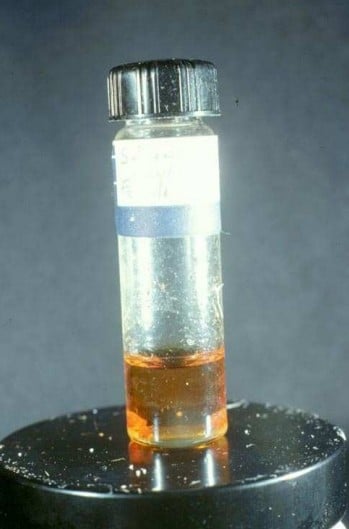
Sample of a striped skunk’s defensive secretion. Photograph courtesy of W.F. Wood and Cal Poly Humboldt.

Subsequent chemical analyses performed on striped skunks’ musk has revealed that it consists of thiols and thioacetates, primarily (E)-2-butene-1-thiol, 3-methyl-1-butane-thiol, and (S)-(E)-2-butene thioacetate. These chemical compounds cause an extreme reaction in mammals, especially if they get into their eyes or end up being ingested. There are even historical medical reports of people being rendered unconscious by high concentrations of striped skunk secretions. More often, though, people experience skunks secondhand through their pets’ interactions with them. While tomato juice has long been proclaimed the solution to skunk odor, research has shown that people tend to experience olfactory fatigue and fail to smell the secretion anymore, thus assuming the tomato juice has done its job. In reality, the thiol compounds are still there, and their presence is often confirmed by another person, fresh on the scene, exclaiming that the stink has not been eradicated and needs more tomato juice. The secret to dispelling the skunk odor is to oxidize the thiols to sulfonic acids, and there are many oxidizing agents that can get the job done. One of the better home remedies out there, developed by Mr. Paul Krebaum of Illinois from a laboratory method, is to bathe the afflicted pet in a mixture of 1 quart of 3% hydrogen peroxide, ¼ cup of baking soda, and a teaspoon of liquid detergent, taking care not to get the solution in the pet’s eyes or mouth. After five minutes, rinse the pet with water, and bathe again in the same solution if necessary. This mixture must never be stored in a closed container, as it releases oxygen and may result in the closed container exploding, and it needs to be used as soon as it is concocted. So, let’s give striped skunks some space while they engage in their romantic endeavors this February. It might be a good idea to stock up on some baking soda and hydrogen peroxide, though, just in case your dog ends up becoming a third wheel. 
Posted on — Leave a comment

Surface Water Connections in 2026: Where the Real Jurisdictional Risk Is

Surface Water Connections in 2026: Where the Real Jurisdictional Risk Is

Surface Water Connections in 2026: Where the Real Jurisdictional Risk Is

An overview for consultants and project teams navigating today’s tighter jurisdictional standards.

Regulatory Briefing • March Field Season Readiness

Cut through the noise. Focus on what delays projects.

If you’re working in wetlands, streams, mitigation, or environmental permitting, you already feel it: the jurisdictional debate isn’t loud anymore. It’s technical.

In 2026, most project delays aren’t coming from sweeping policy changes. They’re coming from a narrower, higher-stakes question:

Does a wetland have a continuous surface water connection to a relatively permanent water?

This isn’t politics. It’s field execution and documentation discipline. And that’s where the real risk sits.

The question that’s now driving everything

The analysis has tightened around physical hydrologic connectivity. The old comfort of broad, functional reasoning has been replaced by something far more demanding: observable, mappable, defensible surface continuity.

That means conclusions increasingly rise or fall on what you can document in the field and in the report—not what you can infer.

Where the risk is actually concentrated

The highest-risk areas are not obvious perennial stream systems. And they’re not clearly isolated upland depressions either. The real exposure sits in transitional features like:

  • Roadside ditches and ditch-modified landscapes
  • Shallow swales and broad, low-gradient connectors
  • Floodplain depressions and backwater areas
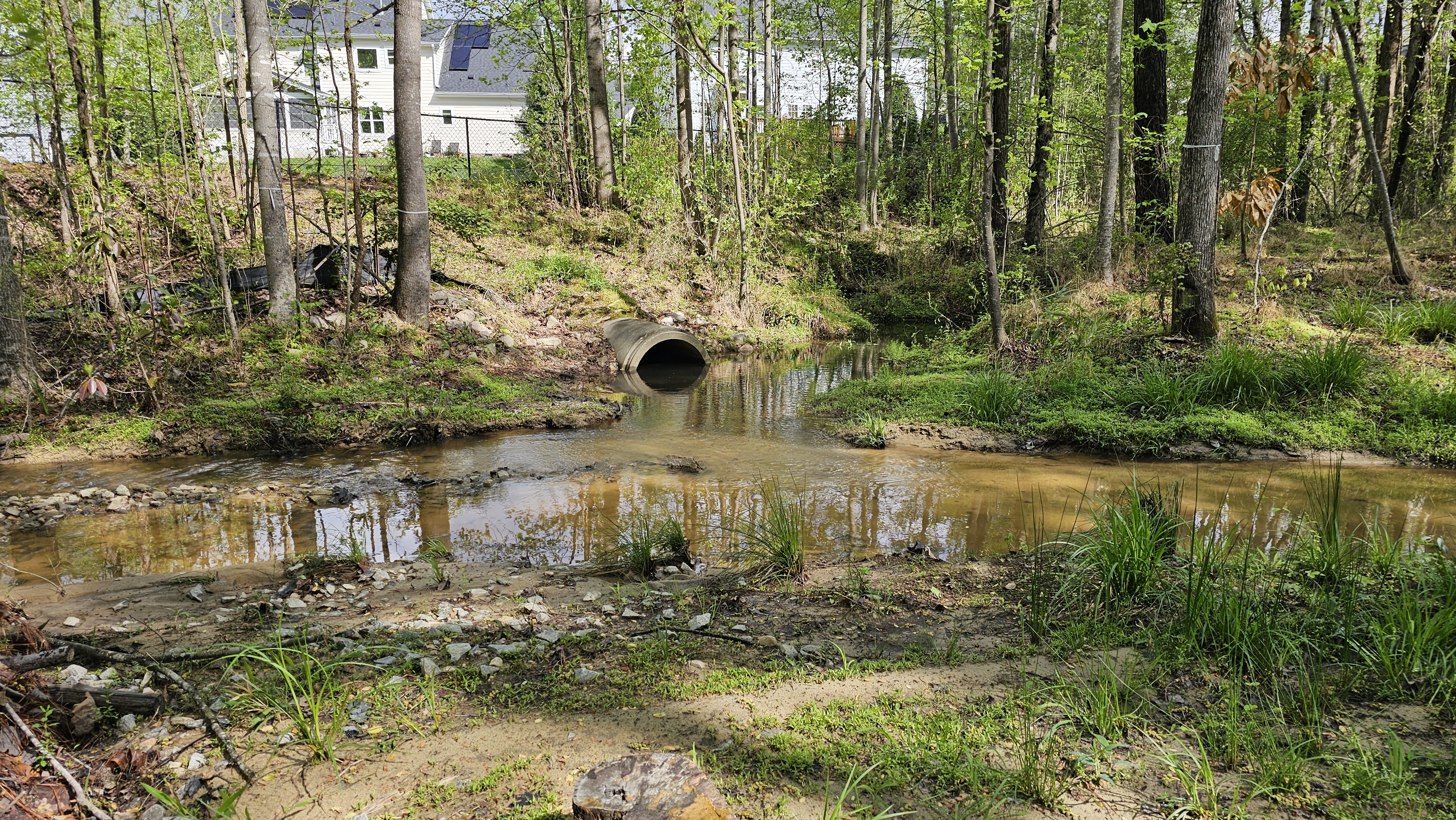
  • Culvert crossings, berms, and roadway barriers
  • Seasonal connectors that appear “disconnected” during dry months
  • Modified drainage systems in agricultural and suburban settings

These are the places where flow is seasonal, infrastructure complicates interpretation, and elevation differences matter more than assumptions.

The two overcorrections we’re seeing

Across the country, firms are responding in two opposite—and equally risky—ways:

1) Over-asserting connectivity.
Carrying forward older adjacency logic and assuming continuity where evidence is thin. If the connection can’t be shown visually and supported spatially, defensibility suffers.

2) Over-disclaiming jurisdiction.
Under-calling features based on dry-season observations alone. That can create exposure in review, enforcement, and in states with independent wetland programs.

In both cases, the problem isn’t ideology. It’s documentation: what was observed, how it was recorded, and how clearly it was explained.

Why this matters financially

Surface water connection determinations now directly affect:

  • Mitigation requirements and bank credit demand
  • Project redesign costs and construction sequencing
  • Schedule predictability and permitting timelines
  • Property valuation and client risk tolerance
  • Long-term liability exposure

A misclassified connection can mean months of delay, significant mitigation expense, or future problems when projects are evaluated under a different lens—sometimes years later.

The trend we’re watching in 2026

One trend is clear: reviewers are increasingly verifying conclusions using geospatial and historic data. The era of “narrative-only” justification is fading.

Expect more reliance on: LiDAR, historic aerials, elevation modeling, and seasonal imagery comparisons.

In this environment, reports that don’t anticipate verification may not age well. Projects outlive field visits.

Where we go deeper: the premium analysis

Inside the Regulatory Briefing Subscription, we’re releasing a full premium white paper:

“Surface Water Connections in 2026: Where Jurisdictional Risk Actually Sits.”

It breaks down what’s driving real project risk, including:

  • How “continuous” is being interpreted in practice
  • Where ditch-based connections become vulnerable
  • How culverts and artificial barriers should be evaluated and documented
  • Why intermittent vs. ephemeral classification now carries amplified consequences
  • What documentation protocols reduce exposure going into field season
  • How to write reports that hold up in both permitting and enforcement contexts

This is not commentary. It is applied regulatory analysis built for professionals managing real projects.

The Regulatory Briefing is designed for signal, not noise

The regulatory environment is not quiet. But most of the noise is not useful. The purpose of the Regulatory Briefing is simple:

  • No political commentary
  • No outrage cycles
  • No speculation disguised as certainty
  • Just clear analysis of what changes mean for real work in the field

Read more about the subscription

If you’re responsible for wetland delineations, jurisdictional determinations, mitigation planning, or environmental compliance strategy, surface water connection analysis is not optional reading in 2026.

Learn about the Regulatory Briefing Subscription

Next month’s release is especially important going into field season—because the risk isn’t where most people are looking. It’s in the transitional spaces.

The Swamp School Regulatory Briefing
Practical, apolitical analysis for professionals working at the intersection of wetlands science and regulation.

Posted on — Leave a comment

The Hidden Costs of Powering Artificial Intelligence

The following blog post is a summary of the article “Data Drain: The Land and Water Impacts of the AI Boom” by Jon Gorey and published by the Lincoln Institute of Land Policy on October 17, 2025. To read the original article, click here.

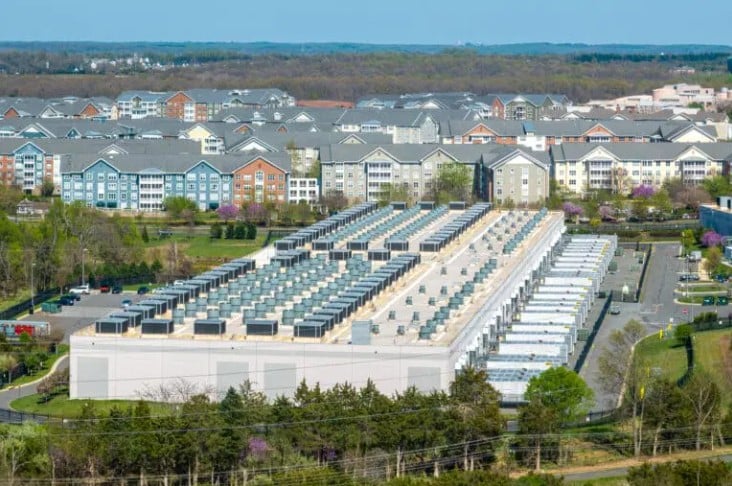
A data center abutting a residential neighborhood in Virginia. Photograph courtesy of Hugh Kenny, the Piedmont Environmental Council, and the Lincoln Institute of Land Policy.

Modern data centers are presented as resource intensive infrastructures that quietly but dramatically reshape local environments, economies, and public utilities. They are often compared to vampires due to their constant appetite for electricity, water, and land, as well as their tendency to operate out of public view. Across the United States, lawmakers are actively attracting these facilities with tax incentives, hoping to benefit from rapid growth driven by artificial intelligence. Even mid-sized data centers consume as much water as small towns and draw electricity comparable to tens of thousands of homes. As AI-focused hyperscale facilities multiply, their cumulative demands on power grids, water supplies, and land are increasing at a pace that often exceeds local planning and regulatory capacity.

The economic benefits associated with data centers are shown to be uneven and frequently overstated. Although some communities receive substantial tax revenues, these facilities create relatively few permanent jobs after construction is complete. Former corporate campuses that once supported thousands of workers are being replaced by massive, fenced off server buildings that offer little connection to surrounding neighborhoods. Meanwhile, the infrastructure required to power and support data centers brings air pollution, health risks, and climate impacts to nearby regions. Water use is especially concerning because much of it evaporates during cooling and never returns to local rivers or aquifers. Even reclaimed water use can deprive downstream communities, reinforcing the reality that water withdrawals have localized and lasting effects.

The rapid expansion of data centers highlights the need for more integrated planning, transparency, and oversight. Decisions about where and how these facilities are built involve trade-offs among water availability, energy production, land use, and climate goals. Heavy reliance on fossil fuel power increases both emissions and water consumption, while cleaner alternatives face political resistance and long development timelines. Infrastructure costs tied to data center growth are often shared across entire utility regions, raising electricity bills for customers who may not benefit from local tax gains. Addressing these challenges requires earlier community engagement, stronger state level coordination, and clearer disclosure from companies about resource use. The broader question remains whether the accelerating demand for artificial intelligence justifies the environmental and social costs concentrated in the places where data centers operate.

#AI #DataCenters #EnergyDemand #WaterUse #WetlandWednesday #TheSwampSchool

Posted on — Leave a comment

Global Water Bankruptcy: Our World Is Living Beyond Its Hydrological Limits

The following blog post is a summary of the report Global Water Bankruptcy: Living Beyond Our Hydrological Means in the Post Crisis Era, published by the United Nations University Institute for Water, Environment, and Health on January 20, 2026. To read the full report, click here.

The United Nations University Institute for Water, Environment and Health report Global Water Bankruptcy: Living Beyond Our Hydrological Means in the Post Crisis Era presents a clear diagnosis that the world has entered a new and dangerous phase in its relationship with water. The report argues that decades of overuse have pushed many human water systems beyond their ability to recover, even during years with normal rainfall. Rivers, lakes, wetlands, aquifers, soils, and glaciers have been depleted or degraded faster than they can be replenished. This condition is described as global water bankruptcy, a state in which long term water use exceeds renewable inflows and safe depletion limits. The report emphasizes that this is not a future risk, but a present reality affecting societies on every continent.

Graphic courtesy of the United Nations University Institute for Water, Environment, and Health.

A central contribution of the report is its distinction between water stress, water crisis, and water bankruptcy. Water stress refers to high pressure on water resources that is still largely reversible with better management. Water crisis describes acute, time limited shocks such as droughts or floods that can, in principle, be overcome. Water bankruptcy, by contrast, is a persistent post crisis condition in which irreversible damage has already occurred. Compacted aquifers do not rebound, lost wetlands do not return, and disappearing glaciers cannot be restored within human time scales. According to the report, continuing to frame these conditions as crises obscures the true scale of the problem and encourages ineffective responses.

Graphic courtesy of the United Nations University Institute for Water, Environment, and Health.

The report documents extensive evidence of water bankruptcy across surface water, groundwater, food systems, and ecosystems. More than half of the world’s large lakes have lost water since the early 1990s, and around seventy percent of major aquifers show long term declining trends. Groundwater depletion has caused widespread land subsidence, affecting millions of square kilometers and putting billions of people at risk. Agriculture, which accounts for roughly seventy percent of global freshwater withdrawals, is increasingly undermined by declining water storage and degrading water quality. At the same time, pollution from wastewater, agriculture, and industry is shrinking the fraction of water that is safe and usable, even where total volumes appear stable.

Graphic courtesy of United Nations University Institute for Water, Environment, and Health.

In response to these realities, the report calls for a shift from crisis management to water bankruptcy management. Rather than trying to restore past conditions that no longer exist, societies must acknowledge irreversible losses and adapt to permanently tighter hydrological limits. This includes rebalancing water rights and expectations, protecting remaining natural capital, and prioritizing basic human needs and ecosystem functions. The report stresses that water bankruptcy is also a justice and security issue, as its impacts fall most heavily on vulnerable communities. It concludes by urging the international community to use upcoming global milestones, including the UN Water Conferences in 2026 and 2028, to reset the global water agenda and align governance with hydrological reality.

#WaterBankruptcy #UNUINWEH #WaterSecurity #WetlandWednesday #TheSwampSchool

Posted on — Leave a comment

North Carolina’s Weird and Wonderful: Skunk Cabbage

Skunk Cabbage in Winter Illustration

Just when you thought you were going to make it through the winter unscathed, an ice storm rolls in. We are just starting to thaw out here in North Carolina, and while warmer days are still a month or two away for us humans, one particular plant is creating its own climate. This month’s Weird and Wonderful focus is on the skunk cabbage, Symplocarpus foetidus. Found in mountain bogs, this rare species is named after its cabbage-like form and its unpleasant odor. The odor has a two-fold purpose: for one, the stink attracts insect pollinators that normally feast on carrion, feces, and other waste, such as flies and the occasional carrion beetle. Two, the smell allows herbivores to remember the unpleasant texture of its leaves after they eat it for the first, and hopefully the last, time. 

Symplocarpus foetidus, skunk cabbage. Photograph courtesy of Marc Seelinger.

As skunk cabbage is one of the first plants to emerge, often doing so in January and February, there are very few pollinators out and about, so this plant has to take what it can get. And, as there is very little greenery available for herbivores to eat in the dead of winter, skunk cabbage can be an appetizing target, until the crystals of calcium oxalate present in its leaves irritates the herbivores’ mouths after their first bite. Skunk cabbage consists of leaves that emerge in spring and are anywhere between 10 and 20 inches long and typically as wide. However, the flower emerges far earlier and consists of a fleshy structure called a spathe, which encloses a structure called a spadix. The spathe is very hood-like and shelters the ball-like spadix, which contains numerous tiny flowers. Brownish purple in color and usually spotted or striped in pattern, the spathe is a weird-looking structure, but it has some wonderful abilities. Its unique shape provides insulation for the spadix and can also deflects air currents around it, thus maintaining a stable temperature inside the hood. Through plant respiration, the spadix is able to produce its own heat and regulate flower temperature. Yep, that’s right, this weird and wonderful plant has the rare ability to generate heat!

Symplocarpus foetidus, skunk cabbage, in bloom. Photograph courtesy of UW-Madison Wisconsin Arboretum.

That heat not only protects the flowers, but also makes them more attractive to the handful of pollinators that are out in late winter. If the scent doesn’t draw them in, the warmth sure will! The flowers, strangely enough, do not have any petals and are protogynous, meaning their female parts flower first. The flowers at the top of the spadix are the first to bloom, and by the time the plants along the bottom begin blooming, the top flowers have produced their male parts. Pollination is then able to begin. The spadix develops into a compound fruit with heavy seeds the size of marbles. Squirrels and some bird species have been known to consume the seeds, but skunk cabbage, for the most part, appears to be a plant for the bugs. Honeybees are sometimes seen within the warm hood in early spring; isopods feast on the decaying leaves and spathes; and spiders often spin webs across the spathe’s opening to catch prey. The marbled cobweb spider, Enoplagnatha marmorata, is often found at the base of the spadix, where it mimics a pollinating male flower. So, the next time you find yourself in a mountain bog, in the dead of winter, in the far-flung northwestern corner of our state, you might get lucky and spy some skunk cabbage. This is one weird and wonderful plant everyone should see in the wild at least once. 

#SkunkCabbage #WeirdPlants #NorthCarolinasWeirdandWonderful #WetlandWednesday #TheSwampSchool

Posted on — 1 Comment

EPA’s Proposed Section 401 Rule: Environmental Protection, Scientific Rigor, and Practical Implications

On January 15, 2026, the U.S. Environmental Protection Agency (EPA) proposed revisions to the Clean Water Act (CWA) Section 401 water quality certification regulations. The docket Number is: EPA-HQ-OW-2025-2929. While the proposal has sparked debate across environmental advocacy, regulatory, and consulting communities, it is best understood not as a simple expansion or rollback of environmental protection, but as a structural realignment of how water quality science is applied within federal permitting.

Viewed through an environmental and environmental scientist lens, the proposal reflects both clear scientific advantages and legitimate ecological concerns, with important implications for how environmental professionals engage in water resource protection going forward.

Re-centering Section 401 on Water Quality Science

At its core, Section 401 asks a focused scientific question:

Will a discharge into waters of the United States comply with applicable water quality standards?

EPA’s proposed rule reinforces this framing by limiting certification review to point source discharges associated with federally licensed or permitted activities. This approach aligns Section 401 with the Clean Water Act’s post-1972 structure, which emphasizes effluent limits, water quality criteria, and compliance monitoring as the primary tools for protecting aquatic resources.

From an environmental scientist’s perspective, this clarity strengthens the technical foundation of Section 401 decisions by:

  • Reinforcing measurable cause-and-effect relationships
  • Anchoring analysis in numeric and narrative water quality standards
  • Improving transparency and reproducibility in certification determinations

Supporters of the rule view this as restoring Section 401 to a role that science is well equipped to support.

Environmental Concerns Rooted in Ecosystem Complexity

Environmental nonprofits and applied scientists have raised concerns that are also grounded in ecological science. Aquatic systems respond not only to discrete discharges, but to cumulative, indirect, and interacting stressors, such as hydrologic alteration, habitat fragmentation, and incremental wetland loss.

From this perspective, narrowing Section 401 review raises questions about:

  • Whether cumulative impacts can still be adequately addressed
  • How changes to flow, connectivity, and habitat quality will be evaluated
  • Whether other Clean Water Act programs are sufficient to capture ecosystem-scale effects

These concerns do not reject discharge-based science. Rather, they reflect the reality that not all ecologically significant impacts are easily attributable to a single discharge point, even when those impacts are measurable and biologically meaningful.

Precision Versus Breadth: A Scientific Tradeoff

The tension underlying EPA’s proposal is not science versus protection, but precision versus breadth.

From a pro-rule scientific standpoint:

  • Section 401 should focus on discharges because that is what the statute regulates
  • Expanding certification to entire project “activities” blurs scientific causation
  • Broader ecosystem concerns are more appropriately addressed through other Clean Water Act tools, such as water quality standards (Section 303), wetland permitting (Section 404), and nonpoint source programs

Critics counter that:

  • Those complementary programs are unevenly implemented
  • Narrowing Section 401 increases pressure on already limited regulatory pathways
  • Fragmenting environmental review risks leaving some impacts insufficiently addressed

Scientifically, both perspectives acknowledge the same constraint: no single Clean Water Act program can address all dimensions of ecosystem health.

Timelines, Data, and Decision Quality

EPA’s proposal reinforces the statutory one-year deadline for certification decisions and restricts withdrawal-and-resubmittal practices that have historically prolonged reviews.

From an environmental science perspective, this change:

  • Encourages earlier and more targeted data collection
  • Reduces procedural delay that does not necessarily improve scientific outcomes
  • Places greater emphasis on baseline data quality at the outset

Environmental advocates note that complex projects and data-limited watersheds may require more time to fully understand impacts, especially under climate-driven hydrologic variability. Scientifically, this highlights the growing importance of long-term monitoring and proactive data development, independent of permitting timelines.

What This Means for Environmental Consultants

The proposed rule also reshapes how environmental consultants and environmental scientists contribute to permitting and water quality protection.

Clearer Scope, More Focused Science

By limiting Section 401 review to point source discharges, consultants gain clearer boundaries for analysis. This supports more precise study design focused on:

  • Discharge characterization
  • Receiving water conditions
  • Applicable standards and criteria
  • Defensible cause-and-effect relationships

More Front-Loaded Technical Work

Standardized certification requirements and firm timelines are likely to shift consulting effort earlier in the project lifecycle. Consultants may be engaged sooner to ensure that:

  • Baseline data are adequate before submittal
  • Discharge-related impacts are fully evaluated upfront
  • Certification requests are technically complete

From a scientific standpoint, this front-loading improves decision quality by providing regulators with stronger data earlier in the process.

Increased Emphasis on Defensible Analyses

A discharge-focused framework elevates the importance of:

  • Quantifiable methods
  • Reproducible results
  • Clear linkage to water quality standards

This favors technically rigorous analyses—such as modeling, targeted monitoring, and biologically relevant indicators—over broader, less precise narratives.

Redistribution of Broader Environmental Work

Broader ecosystem concerns emphasized by environmental nonprofits do not disappear under the proposed rule. Instead, they are more likely to shift to:

  • Section 404 permitting and mitigation
  • Watershed-scale assessments
  • Water quality standards development and impairment analysis
  • Nonpoint source and cumulative impact studies

For consultants, this may result in more integrated, multi-program project roles, rather than reduced demand.

Reduced Procedural Rework

Limiting withdrawal-and-resubmittal practices may reduce repeated sampling and analysis driven solely by administrative delay, shifting consultant effort toward getting the science right the first time.

An Integrated Environmental Takeaway

From an environmental and environmental scientist perspective, EPA’s proposed Section 401 rule represents a re-definition of responsibility rather than a reduction in protection.

The proposal:

  • Strengthens scientific defensibility by focusing on discharge-based impacts
  • Clarifies regulatory expectations for data and analysis
  • Limits Section 401’s scope, increasing reliance on other Clean Water Act tools for ecosystem-scale protection

The critical question moving forward is not whether Section 401 should address every environmental concern, but whether the entire Clean Water Act framework is functioning as an integrated system capable of protecting the chemical, physical, and biological integrity of aquatic resources.

Public comments on the proposal are due February 17, 2026, offering environmental scientists, nonprofits, consultants, and regulators an opportunity to shape how clarity, scientific rigor, and environmental protection advance together.

Posted on — 4 Comments

NEPA Changed in 2026. Here Is What That Means for Wetlands

In January 2026, one of the most significant procedural changes to federal environmental review in decades quietly became final. The Council on Environmental Quality, commonly known as CEQ, removed all of its National Environmental Policy Act implementing regulations from the Code of Federal Regulations.

For wetlands professionals, this change does not eliminate environmental review, nor does it remove wetlands from federal decision making. What it does change is who controls how wetlands are analyzed under NEPA and how consistent that analysis will be across agencies.

Understanding this shift is now essential for anyone working in wetland delineation, permitting, mitigation, or environmental compliance.

A Quick Look Back at CEQ’s Role

NEPA was enacted in 1969 as a procedural law. It requires federal agencies to consider environmental impacts before making decisions, but it does not dictate exact methods for doing so.

That gap was filled in 1978, when CEQ finalized government wide NEPA regulations under authority granted by Executive Order 11991. For nearly fifty years, those regulations provided a shared structure for NEPA reviews across all federal agencies.

Wetlands were consistently addressed under this framework as part of the affected environment. Agencies followed similar expectations for impact analysis, alternatives evaluation, and mitigation discussions, even when project types differed.

Why the CEQ Regulations Were Removed

In January 2025, Executive Order 14154 rescinded Executive Order 11991. With that action, CEQ determined that it no longer had authority to issue binding regulations governing how other federal agencies implement NEPA.

CEQ issued an interim final rule in February 2025 removing its NEPA regulations and invited public comment. After reviewing more than 100,000 comments, CEQ finalized the rule without changes. As of January 8, 2026, the CEQ NEPA regulations are officially gone.

What Did Not Change

This is where many misconceptions arise.

NEPA is still federal law. Agencies must still analyze environmental impacts, consider alternatives, and document their decision making. Environmental Assessments and Environmental Impact Statements still exist.

Wetlands are still subject to NEPA review when affected by federal actions. This includes projects involving Clean Water Act Section 404 permits, federal transportation funding, energy development, flood control, and federal land management.

The rule also did not eliminate agency specific NEPA procedures. Every federal agency has its own NEPA procedures, many of which closely resemble the former CEQ regulations. Those procedures remain in effect unless revised.

What Actually Changed for Wetlands

The key change is structural rather than substantive.

There is no longer a single, government wide set of NEPA rules issued by CEQ. NEPA implementation now depends on three things:

  • The statutory text of NEPA as amended in 2023
  • Each agency’s NEPA procedures
  • CEQ guidance, which is advisory rather than binding

For wetlands professionals, this means agency specific practice now matters more than ever.

Why Agency Procedures Matter More Now

Under the former CEQ framework, wetlands analysis looked broadly similar across agencies. With CEQ regulations removed, that uniformity may erode over time.

For example:

  • U.S. Army Corps of Engineers NEPA procedures will drive how wetlands are analyzed for Section 404 permits
  • Federal Highway Administration procedures will control wetland analysis for transportation projects
  • Bureau of Land Management or Department of Energy procedures will guide wetlands analysis on federal lands or energy projects

All of these approaches can satisfy NEPA, but they may differ in emphasis. Some agencies focus heavily on acreage and mitigation ratios. Others emphasize wetland functions, avoidance measures, or land use context.

This does not mean wetlands are less important. It means the framework for discussing wetlands is no longer centralized.

Increased Importance of Wetland Documentation

With courts now relying more heavily on agency specific procedures, the quality of wetlands documentation becomes even more critical.

Wetland delineations, jurisdictional determinations, impact calculations, and mitigation plans must be clearly aligned with the lead agency’s NEPA process. Assumptions based on old CEQ templates may no longer be sufficient.

This rule does not change Waters of the United States definitions or Clean Water Act jurisdiction. However, NEPA documents often include both jurisdictional and non jurisdictional wetlands. How those wetlands are described and analyzed may now vary more by agency.

For wetland consultants, this increases the importance of early coordination with the lead federal agency and careful attention to agency guidance.

What This Means in Practice

In the short term, most wetland projects will continue largely unchanged. Agencies are still using existing procedures, and many procedures reflect decades of CEQ based practice.

Over time, however, greater variation among agencies is likely. Wetlands professionals should expect:

  • More agency specific expectations
  • Less reliance on one size fits all NEPA templates
  • Greater scrutiny of how wetland impacts support agency decision making

The Swamp School Takeaway

The removal of CEQ’s NEPA regulations does not reduce the importance of wetlands. Instead, it shifts responsibility for how wetlands are analyzed directly to individual federal agencies.

For wetland scientists and practitioners, success under NEPA now depends on understanding agency specific procedures, aligning wetland studies with those procedures, and clearly documenting how wetlands were evaluated.

At The Swamp School, this reinforces the need for strong technical foundations, regulatory awareness, and practical application. NEPA did not disappear. It evolved. Wetlands professionals who adapt will continue to play a critical role in federal environmental decision making.

Posted on — Leave a comment

The 2026 Nationwide Permits and Florida’s Status Under Nationwide Permit 24

The U.S. Army Corps of Engineers finalized the 2026 Nationwide Permits (NWPs) on January 8, 2026. These permits replace the 2021 Nationwide Permits and will govern a large portion of Clean Water Act Section 404 authorizations nationwide for the next five years. While the overall structure of the nationwide permit program remains largely unchanged, the final rule includes clarifications and targeted revisions that affect how permits are applied, how Clean Water Act Section 401 is implemented, and how state and federal permitting authority is understood.

One of the most discussed changes in the final rule is the removal of Florida from Nationwide Permit 24, which applies in states that have assumed administration of the Section 404 program. Understanding this change requires looking at both how nationwide permits function and how Florida’s assumed program has evolved.

Overview of the Nationwide Permit Program

Nationwide permits are issued by the Corps under Section 404(e) of the Clean Water Act and, where applicable, Section 10 of the Rivers and Harbors Act. They authorize categories of activities that the Corps has determined will result in no more than minimal individual and cumulative adverse environmental effects.

Nationwide permits are designed to streamline permitting for common activities such as utility crossings, bank stabilization, minor road crossings, and maintenance work. They operate subject to:

  • Nationwide permit specific terms and limits
  • Nationwide General Conditions
  • Regional conditions imposed by Corps divisions
  • Clean Water Act Section 401 water quality certification
  • Pre construction notification requirements where applicable

The 2026 Nationwide Permits become effective March 15, 2026 and are scheduled to expire on March 14, 2031.

Key Themes in the 2026 Nationwide Permits

The 2026 NWPs do not represent a major expansion or contraction of the program. Instead, the final rule emphasizes clarity and consistency. Notable themes include:

  • Clarification of how Section 401 water quality certification applies to nationwide permits
  • Greater emphasis on compliance with general conditions
  • Reinforcement of district engineer discretion through regional conditions
  • Clarification of how multiple nationwide permits may be used for a single project

These changes reflect a broader trend toward strengthening the administrative record and reducing ambiguity in permit implementation.


What Nationwide Permit 24 Is

Nationwide Permit 24 is different from most nationwide permits because it applies only in states that have assumed administration of the Clean Water Act Section 404 program under Section 404(g).

When a state assumes the Section 404 program, it becomes the primary permitting authority for most discharges of dredged or fill material into waters of the United States. Federal law, however, does not allow states to assume jurisdiction over all waters. The Corps retains authority over traditionally navigable waters, waters subject to Section 10, and certain adjacent waters.

Nationwide Permit 24 exists to authorize activities in those retained federal waters within assumed states. Its use depends on a clear and legally stable division of permitting authority between the state and the Corps.

Florida’s Section 404 Program Background

Florida began administering a state Section 404 program in December 2020 following approval by the U.S. Environmental Protection Agency. The assumption did not transfer all federal permitting authority to the state. As a result, Florida operated under a divided regulatory framework in which both the state and the Corps issued permits depending on the type and location of waters affected.

Following EPA’s approval, litigation challenged whether the approval complied with the Endangered Species Act, particularly with respect to program level consultation. Federal courts vacated portions of the approval, creating uncertainty regarding the legal foundation of the assumed program.

Removal of Florida From Nationwide Permit 24

In the 2025 proposed Nationwide Permits, Florida continued to be listed as an assumed state under Nationwide Permit 24. The proposal did not suggest removing Florida or solicit comment on that issue.

In the 2026 final rule, the Corps removed Florida from Nationwide Permit 24. The Corps described this change as administrative and stated that it does not affect the number of activities authorized by nationwide permits. The removal aligns the nationwide permits with the current legal status of Florida’s Section 404 program at the time of finalization.

The change becomes effective March 15, 2026, when the 2026 Nationwide Permits take effect.

Practical Implications for Permitting in Florida

With Florida no longer listed under Nationwide Permit 24, the Corps remains the primary federal permitting authority for Section 404 activities involving waters of the United States in Florida, subject to the limits of federal jurisdiction.

Projects in Florida may still rely on other applicable nationwide permits or individual permits issued by the Corps, provided all applicable requirements are met. Clean Water Act Section 401 water quality certification remains required before a nationwide permit authorization becomes valid.

From a practical standpoint, the change underscores the importance of:

  • Verifying permitting authority early in project planning
  • Confirming which nationwide permits apply
  • Tracking state Section 401 certification decisions and conditions
  • Accounting for regional conditions imposed by the Corps

Broader Context

The Florida Nationwide Permit 24 issue highlights how nationwide permits depend on program level legal stability. Nationwide permits are intended to operate consistently across Corps districts. When the status of a state assumed program is uncertain, applying a permit designed specifically for assumed states becomes more complex.

The final rule does not resolve broader questions about the future of Florida’s assumed Section 404 program. Those issues remain subject to future administrative actions and court decisions.

Looking Ahead

The 2026 Nationwide Permits will guide federal wetland permitting through 2031. While many aspects of the program remain familiar, understanding targeted changes and state specific issues such as Florida’s status under Nationwide Permit 24 is essential for effective compliance and project planning.

The Swamp School will be addressing these topics in upcoming training, including a Nationwide Permits webinar on February 19, 2026, which will provide a detailed review of the final permits and their practical implications.

Posted on — Leave a comment

Using Sound to Fight Harmful Cyanobacteria Blooms

The following blog post is a summary of the article “Can an Ultrasonic Device Burst the Algal Bloom Bubble?” by Elijah de Castro, published in Sierra magazine on October 12, 2025. To read the original article, click here.

Cyanobacteria blooms have become a widespread indicator of declining water quality in lakes, rivers, and oceans. These blue green blooms flourish when warm water combines with nutrient rich runoff from agriculture, especially fertilizers. As cyanobacteria spread across the water surface, they consume oxygen, which leads to fish kills and damages aquatic ecosystems. Although commonly called algae, cyanobacteria are distinct organisms and are responsible for the most harmful blooms. These blooms can also pose risks to human health, including skin irritation and breathing problems. Their increasing frequency reflects broader environmental stress on waterways.

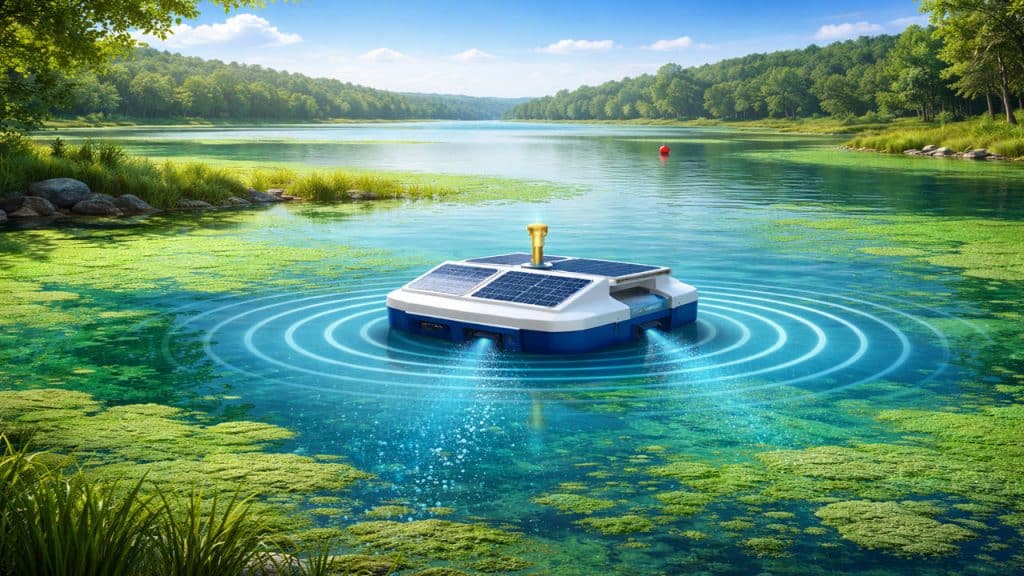
Government agencies have traditionally relied on methods such as algaecides, reduced till farming practices, and increased water circulation to manage blooms. While effective in some cases, these approaches can be costly, slow to implement, or harmful to ecosystems. As a faster and more affordable option, some agencies are using ultrasonic algae remediation devices. These devices emit low frequency sound waves that rupture gas vacuoles inside cyanobacteria. Without these air-filled structures, the organisms lose buoyancy, sink, and can no longer photosynthesize. Over time, this process leads to their decline without directly harming fish or other aquatic life.

Despite their promise, ultrasonic devices have clear limitations and cannot solve the problem on their own. They are most effective in small bodies of water and are impractical for vast systems such as the Great Lakes, where blooms can be visible from space. Climate change is worsening the issue by warming lakes and increasing nutrient runoff, which accelerates cyanobacteria growth. In this context, ultrasonic devices function mainly as a short-term measure that reduces immediate harm. Agencies have used them successfully to suppress blooms while planning larger infrastructure improvements. Ultimately, lasting solutions depend on addressing the upstream pollution and warming that allow cyanobacteria to thrive.

#WaterQuality #Cyanobacteria #NutrientRunoff #ScienceInAction #WetlandWednesday #TheSwampSchool

Posted on — Leave a comment

North Carolina’s Weird and Wonderful: Ornate Chorus Frog

Pseudacris ornata, the ornate chorus frog. Photograph courtesy of Todd Pierson and Herps of NC.

It’s time to wrap up another year and welcome a new one. Time to pack up elaborate light displays and Charles Dickens-style caroling outfits. And it is also time for another edition of North Carolina’s Weird and Wonderful. To finish up the year, and in the spirit of singing carols, I decided to focus on an amphibian: Pseudacris ornata, the ornate chorus frog. A small, plump frog that comes in colors ranging from reddish brown to green, tan, or gray, this colorful species’ calls can be heard now through March in the southern Coastal Plain of our state. While it is similar to the call of the spring peeper frog, the ornate chorus frog’s call is more metallic, rapid, and monotonic, sometimes described as a metallic “tink”. 

Color variations of the ornate chorus frog, Pseudacris ornata. Photograph courtesy of the University of Georgia’s Savannah River Ecology Laboratory.

This species is one that very few have seen, as they are nocturnal, and historical natural history records suggest that this species, unlike other chorus frog species, is more fossorial in nature. This means adult ornate chorus frogs spend a good portion of their time in burrows, as opposed to shrubs and trees like other frogs. This weird and wonderful habit would explain why they are hard to find when not actively engaged in breeding behavior, which primarily occurs during the winter months. Ornate chorus frogs utilize temporary ponds, vernal pools, Carolina bays, and even flooded ditches as breeding grounds in longleaf pine stands and pine savannas. Females deposit their egg clusters, which can range in size from 10 eggs to 100 eggs, on stems or other objects submerged in shallow water. The eggs hatch after 1-2 weeks, and it takes the tadpoles about 8-12 weeks to complete metamorphosis. A smaller frog species overall, the freshly metamorphosed froglets are almost the size of adult ornate chorus frogs. 

An ornate chorus frog tadpole, left, and an older ornate chorus frog tadpole, right. Left photograph courtesy of John Jensen; right photograph courtesy of Kevin Enge; and both photographs courtesy of Angela K. Burrow and Southeast PARC.

Unfortunately, the population of ornate chorus frogs in North Carolina is declining, due to the destruction of temporary wetlands, longleaf pine stands, and pine savanna habitats. This weird and wonderfully colorful frog will be at an increased risk of disappearing come 2026, when the new Waters of the U.S. rule will go into effect, as many isolated, temporary wetlands that this species use for breeding will lose federal protections. Since North Carolina does not impose environmental restrictions greater than those at the federal level, the ornate chorus frog, and many other amphibians, will need the public to champion them and work to preserve their habitats. So, if you have never seen the ornate chorus frog in the wild, but would like to in the future, make sure your local and state leaders know how important the wetland habitats of the longleaf pine stands and pine savannas are to our state’s overall biodiversity. The fate of this beautifully weird and wonderful frog may very well rest in your hands. 

#NCWeirdAndWonderful #OrnateChorusFrog #NorthCarolinaWildlife #AmphibianAwareness #WetlandConservation #Biodiversity #NativeSpecies #TheSwampSchool