The following blog post is a summary of the research paper “Climate change will reduce North American inland wetland areas and disrupt their seasonal regimes” by Xu et al., published in Nature Communications on March 18, 2024. To read the original research paper, click here.
Chances are that if you are reading this article, you have an interest in wetlands. Perhaps you even recognize how important they are to maintaining our fragile existence in this world. Wetland habits are flood control measures and can prevent whole neighborhoods from ending up underwater during normal and above normal rainfall conditions. They are great hurricane buffers, helping to absorb storm surges in coastal areas. Giant filter systems, wetlands filter out sediment, one of the most extensive water pollutants in the world, in addition to other toxic substances. And in a world where “carbon” might be considered a dirty word, wetlands sequester organic carbon in the soil at a much higher rate than most other ecosystems.
Unfortunately, wetlands are also susceptible to climate change. A study published in 2024 in the academic journal Nature Communications found that the annual wetland area in North America would decrease about 10% due to predicted changes in precipitation and temperature. Primarily influenced by surface water dynamics, wetlands may or may not be inundated with water throughout the whole year. Increases in temperature can lead to wetland habitats shrinking as they dry up; in northern regions, water that would normally be unable to soak into the ground due to frozen layers now has no problem soaking into the earth. This leaves previously hydric soils to dry out and become upland soils over time.
The researchers utilized the Energy Exascale Earth System Model (E3SM) to “understand the drivers and future trajectories of inland wetland area changes” in North American, which they defined as extending from 25°N to 53°N. This model is based on the most up-do-date climate change projections and combines atmospheric, land, ocean, land ice, sea ice, and river processes data. Earth system models, as a whole, are great tools for understanding large-scale changes brought on by external forces. The model’s results revealed that the forecasted changes in the global climate will negatively impact wetlands in the future. The negative impacts are due to the water balances of wetland areas becoming altered due to increases in temperature and disruptions in normal precipitation patterns. The scientists conducting the research emphasize that their research did not take into account direct disturbance to wetlands as a result of human activities, including urbanization and agricultural expansion. Their results should not be taken lightly, as it seems North America will continue to lose essential wetland ecosystems well into the future, if actions to combat climate change and establish legal protections for wetlands are not put into place.
It’s that time of the month again: the time to learn about one of North Carolina’s weird and wonderful species! This month, I decided to go back to The Swamp School’s roots: wetlands. That decision helped me decide on a mammal: the mink, to be exact. This species, Mustelavision, is most often associated with fur coats. This is because of their fur structure: their outer coat of fur consists of oily guard hairs, but their inner coat, called underfur, is thick, soft, and prized for making articles of clothing. So….how is this small mammal connected to wetlands? Minks are semi-aquatic and live almost exclusively in wetland habitats across the state, with higher population numbers present along the coast due to the abundance of coastal wetlands and marshes. Remember that oily outer layer of fur? It gives the mink a waterproof layer when they swim, hunt, and cavort in the water. Their aquatic activities are also aided by slight webbing of the skin between each of their toes on each foot. In addition to being weird and wonderful, that is just plain cute.
Minks are nocturnal animals, which explains why many people have never seen one in the wild. Carnivorous, minks eat a wide variety of fauna, including frogs, fish, crustaceans, turtles, birds, and small mammals. In essence, anything they can get their small, webbed paws on, they will eat. This can lead to conflict with humans, as they have been known to kill small livestock. However, if attacked livestock do not live anywhere near a body of water, minks are not a likely suspect. Solitary and highly territorial, each animal establishes and defends their territory. These territories tend to be linear in nature, as minks’ travel patterns often follow linear waterway routes along rivers, streams, floodplain wetlands, and other aquatic habitats. Males and females will briefly come together to breed in late winter or early spring. One of the weird and wonderful things about them involves their reproductive biology. Minks are one of several mammalian species where the fertilized egg is not immediately implanted in the womb. Instead, implantation is delayed anywhere from 10-40 days. Once the egg is implanted, a female mink will give birth to a litter of blind, hairless kits after a month-long gestational period.
Humans are the primary threat to mink populations in North Carolina in one of two ways: by trapping and harvesting them for their fur, and by destroying wetland habitats. Mink can still be legally harvested during certain times of the year, but the North Carolina Wildlife Resources Commission heavily regulates that activity. Thus, trapping has not had a large negative effect on our state’s mink population. What has had a negative effect is habitat destruction. With little to no state wetland protections in place, wetlands across North Carolina are regularly filled in to make way for the construction of roads and new developments. Without wetlands, minks are at an increased risk of going extinct. When they do survive the initial wetland destruction, their food sources are often heavily polluted, which is particularly damaging to this predator species. As minks are at the top of their food chain, they are vulnerable to the biomagnification of toxins, which is compounded by their own biochemical processes that concentrate pollutants within their tissues. So, if you want to continue having this weird and wonderful mammal in North Carolina, do your best to protect, conserve, and restore wetland habitats in the state. With the added benefits of acting as a form of flood control and hurricane buffers, in addition to keeping our groundwater clean, humans and our weird and wonderful mink neighbors need wetlands as much as they need us.
The following blog post is a summary of the article “From Kyiv to the Suwałki Gap, bogs return as Europe’s defensive shield” by Zia Weise, Wojciech Kość, and Veronika Melkozerova on August 26, 2025, in Politico. To read the original article, click here.
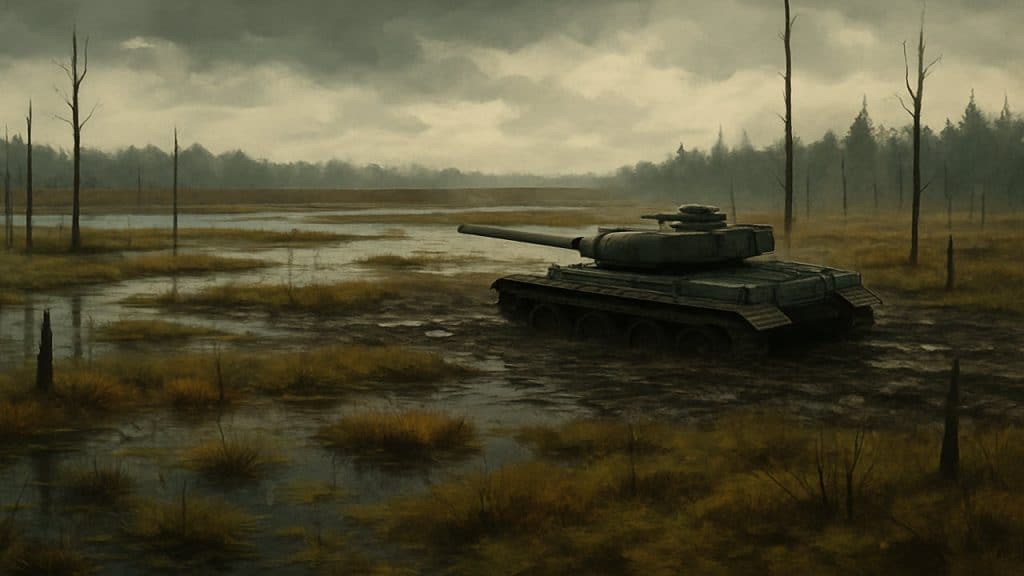
In February 2022, as Russian forces advanced on Kyiv, defense consultant Oleksandr Dmitriev proposed an unconventional but effective strategy. Having organized offroad races in the Irpin River area, he knew the terrain well and understood the impact of restoring the floodplain. By blowing up a dam, Dmitriev allowed water to rush back into the bogs and marshes, turning the land into a swampy trap for enemy vehicles. This tactic successfully halted Russia’s assault from the north, leaving their tanks immobilized in the mud. The images of stranded Russian forces quickly spread, showcasing how nature could serve as an unexpected line of defense.
This wartime lesson is now influencing broader policy across NATO’s eastern flank. Countries such as Finland and Poland are actively exploring bog restoration not just as a defensive measure but also as a climate strategy. Bogs, rich in peat, are known to store massive amounts of carbon dioxide, making them powerful tools in the fight against global warming. Yet, many of Europe’s bogs have been drained for agriculture, releasing greenhouse gases and making terrain more accessible to heavy vehicles. Governments are beginning to see dual benefits in restoring wetlands: slowing climate change while simultaneously creating natural barriers against potential invasions.
The ecological value of bogs extends beyond climate regulation. These unique ecosystems cover only a small portion of the planet but hold a disproportionate share of stored carbon — even more than forests. When drained, however, they release centuries’ worth of carbon emissions, worsening global warming. Restoration efforts across the EU are gaining traction under new environmental laws, with specific targets to rewet and repair degraded peatlands. Scientists argue that bog rehabilitation can be done relatively quickly and cheaply, especially in regions already prone to water saturation. As history shows, such landscapes have repeatedly played decisive roles in warfare by trapping armies and forcing them into vulnerable positions.
Despite its promise, bog restoration faces challenges, particularly from agriculture and local opposition. Farmers are concerned about losing productive land, and some residents fear flooding, even though experts dismiss these worries as exaggerated. To make large-scale projects viable, governments may need to compensate or incentivize farmers to adopt peat-friendly practices. Additionally, while bogs can hinder tanks and trucks, they cannot stop drones or missiles, meaning they must complement rather than replace traditional defense systems. Still, the integration of environmental goals with national security could unlock significant political will and funding, making bogs a central part of Europe’s future strategy for both defense and climate resilience.
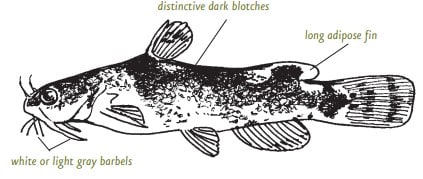
It is back to school season, which means this month’s Weird and Wonderful focus is going to be about fish! Specifically, North Carolina’s own Carolina Madtom, Noturusfuriosus. So, what exactly is a madtom? Madtom is a term used to refer to a group of small catfish species, and they can be told apart from the larger catfish species by their adipose fin. In madtoms, the adipose fin forms a low ridge, giving the fish the appearance that they have one long, continuous fin along their back. The larger catfish have a more clearly defined adipose fin. While there are six madtom species that occur in our state, the Carolina Madtom is the only one endemic to North Carolina, meaning it is not found anywhere else. It reaches a maximum length of 5 inches and has a stocky, chubby body with a pattern of three dark “saddles” along its back. Currently, this species only occupies portions of the Tar and Neuse River basins, and ichthyologists (scientists who study fish) recognize each of those basins as having distinct populations of the species.
The Carolina Madtom requires free-flowing, clear to coffee-color streams, usually with sand, gravel, and detritus bottoms. During the warmer months of the year, adult fish tend to be found in areas near swift currents, while juveniles hang out in shallower riffles and runs with slower currents, though some overlap has been known to occur. Now, one of the weird and wonderful things about this species is that it has well-developed serrae, or saw-like projections, on both ends of its pectoral spines. The venom in the tips of the serrae on the Carolina Madtom is potent enough to earn this fish the title of most strongly armed North American catfish! How awesome is that? When first described in the late 1800s, ichthyologists chose the species name “furiosus” as a nod to their painful venom.
Currently listed as a Federal Species of Concern and as a Threatened species in North Carolina, the Carolina Madtom isn’t giving up just yet. While suffering catastrophic populations losses in the Neuse River Basin, the population in the Tar River Basin has fared better. In 2018, the North Carolina Wildlife Resources Commission reached out to Conservation Fisheries, a non-profit organization, and asked for help boosting the Carolina Madtom populations in both river basins. Conservation Fisheries (CFI) is a captive propagation facility “dedicated to the preservation of aquatic biodiversity in our streams and rivers.” Through their efforts, hundreds of Carolina Madtoms have been bred and stocked in tributaries to increase the natural populations.
During the breeding season, adults move to areas with moderate to slow flow that also have abundant cover in the form of woody debris piles, mussel shells, and even improperly discarded bottles and cans. Females will lay 80 to 300 eggs per breeding season, which runs from May through July, in nests comprised of the cover items. The males will stay with the nest and guard the eggs until they hatch. CFI has documented that, in captivity, at least, the males often fast—sometimes for as long as a month—until the eggs hatch. If they do eat, they have been observed spinning very rapidly to create a suction force that draws food into the nest. A fish with painful venom and the ability to create a suction force sounds like a weird and wonderful creature to me! CFI has found that allowing the male Carolina Madtoms to care for the eggs until right before they hatch or just after hatching improved the odds of the baby fish surviving. The juveniles reach sexual maturity between two and three years of age, and this species lifespan is at least 4 years of age, though further research may reveal it to be longer than that.
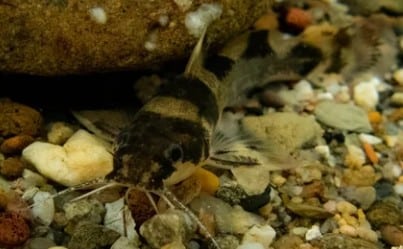
Noturusfuriosus, Carolina Madtom. Photo courtesy of Derek Wheaton and Conservation Fisheries.
Since the Carolina Madtoms are a non-game species and exist in only a handful of locations, chances are, you will not encounter one of these feisty fish in the wild. So where can you see them? Conservation Fisheries offers tours of its facility, located in Knoxville, Tennessee, so if you want to see these fish and many other threatened and endangered species, consider filling out their tour request form. If you want to help them out in the wild, support stream and river clean-up efforts: the better the water quality, the more aquatic macroinvertebrates you will have, which means better water and more food for this species and their aquatic neighbors. These weird and wonderful fish, painful venom and suction force powers in all, need all the help they can get.
You know summer is upon you in North Carolina when you begin to see hummingbirds flitting about your yard, receiving sustenance from nectar in the beautiful native flowers you have planted, or from the sugar syrup you have concocted and placed in the lovely hummingbird feeder hung on your back porch. For me, they conjure up childhood memories of staring at the mountain laurels off my grandparents’ back porch with binoculars, determined to find the hummingbirds’ nest. Every year, ruby-throated hummingbirds return to that small stand of shrubbery and raise their chicks, sustained by the flowers my grandmother plants and the simple syrup my grandparents continuously supply. Alas, I have yet to see their nest with my own two eyes, but Grandpa was more persistent in his quest, as Grandma recently informed me that he did, in fact, find their nest one year. I’m hoping he photographed it and left some of the film or photos for us to find. But I digress. In case you haven’t picked up on it yet, this month’s edition of North Carolina’s Weird and Wonderful is on the ruby-throated hummingbird, Archilochuscolubris.
The ruby-throated hummingbird is the only one of the hummingbird species, or hummers, as they are called, that is widespread in the Eastern United States. While you may find the occasional straggler at your feeder from one of the other species, 99% of the time the hummers you will see in NC are of the ruby-throated variety. The hummingbird family, Trochilidae, represents the smallest birds on our planet. Sometimes described as flying jewels (a description many members of the insect order Coleoptera share, but that is a discussion for another time), hummers have iridescent feathers, and male ruby-throated hummers have bright red throats, hence their common name. The females have bright green crown, and their needle-like bill is ever-so-slightly shorter than the males’. Perfect for sipping nectar, humming birds will hover in front of a tubular flower (red flowers are their favorite) and sip the nectar.
Let’s focus on one word in that previous sentence: hover. A warning, this blog is about to get technical, but bear with me. It is truly fascinating how these tiny flying jewels of the bird variety are able to hover in place. This remarkable ability is due to the size of their flight muscles in relation to one another and in how they invert their wings. In flight, there are upstrokes and downstrokes. Downstrokes are what support the body weight in the majority of flying birds, whereas upstrokes, or recovery strokes, are of little or no use when it comes to bearing weight. The two muscles utilized for upstrokes and downstrokes are the supracoracoideus and the pectoralis. In most other birds, the supracoracoideus muscle is 1/5th the size of pectoralis; in hummingbirds, the supracoracoideus muscles are about half the size of their pectoralis muscles, and the muscle tissue is comprised of cells that contain giant mitochondria. In case you last heard the term “mitochondria” in your high school science class, let me refresh your memory and explain that mitochondria are the power houses of the cell. It’s where food is converted into energy at the cellular level. Ruby-throated hummingbirds, and their hummer kin, have larger upstroke muscles and have more energy-conversion capabilities than other bird groups. In addition, they can rotate their forearm, which inverts their handwing bones and the primary feathers that cover them. As their primary feathers make up 75% of their wing area, this rotation and inversion allows them to achieve a more completely reversed ratio of lift to drag. When you combine their larger muscles, increased mitochondrial output, and the ability to rotate their handwing, you get a small bird that has a very powerful upstroke, which allows them to support their body weight continuously through downstrokes AND upstrokes. The result: the ability to hover in place while your wings beat so fast that they appear as a blur and emit only a hum.
But that’s not all! Ruby-throated hummingbirds are also important pollinators. In order to hover, they need food for energy, and that fuel comes from the nectar. When they insert their bill into a flower, they end up collecting pollen from that flower and depositing pollen from another flower onto it. Remember when I mentioned that red flowers are their favorite? Red flowers tend to have richer nectar stores than flowers of other colors; in addition, many species of bee are red-blind, so they are not attracted to red flowers, leaving more nectar for their avian friends. Members of this species need all the nectar they can get: come fall, almost all of them will depart from North America and fly to Mexico and portions of Central and South America to overwinter, returning to points north in the spring and summer. As one can imagine, such a journey requires that the birds have sufficient fuel stores.
Of course, prior to their journey, these hummers need energy for more rewarding activities. Male ruby-throated hummingbirds are highly territorial and will chase off any intruding males. Once they have mated with a female, their work is done, and the female will construct a small, compact nest with an open top using spider webs, mosses, fine grasses, and other soft materials. She will often decorate the outside of the nest with lichen to enhance its camouflage. Two tiny white eggs are laid, and they are solely incubated by the mother. Once they hatch, she will gather tiny insects in mid-air and regurgitate them into the waiting, wide open beaks of her offspring. The chicks’ first flight typically takes place about 20-22 days after hatching, and their mother will probably have a second brood in the same season, possibly even a third.
So, how can you help the ruby-throated hummingbirds in your neck of the woods? Make sure to have lots of flowering plants on your property! Remember, they favor native, red blooms that produce a lot of nectar. While bees can’t register the color red, they can see colors in the UV spectrum and will compete with the birds for the nectar if no other flowers are available. Be sure to plant lots of other flowers of different colors for the bees, moths, and other insect pollinators. You can supplement nectar from flowers with a hummingbird feeder, but prepare your own simple syrup. The ruby-red hummingbird food you can buy is actually not that great for them, due to the chemical that gives it that signature color. Once there is a steady food source, you will be able to enjoy seeing these shimmering birds fly to and fro across your landscape!
Frequent readers of our blogs might have noticed a theme lately: gardening. Specifically, gardening with native plants. Whether that is for large-scale projects, such as roadsides, or on a smaller scale in your own backyard, native plants are making a comeback. This week, we’re going to discuss native plant gardening, but with a twist: backyard wetland gardening! For those of you who have followed The Swamp School for some time, the “wetland” part should not be a surprise.
Why native plants? One word: insects. Some may call them creepy crawlies; others, irritants; however, for most of the songbirds in North Carolina, they are simply called food. But where do these creepy crawlies get their food, to grow nice and plump and juicy for the birds? Most often, they feed on native plants. Our native insects and plants have evolved together over thousands of years. The plants have evolved ways to survive in spite of being munched on, and the insects have evolved ways of munching on the plants in spite of their attempts to remain uneaten. Remove the native trees, shrubs, and wildflowers and replace them with ornamentals and manicured lawns, with all of the herbicides and pesticides that go along with them, and your local insect population becomes drastically reduced. That, you might not mind so much. But you might mind the decrease in songbirds, who have moved on to other locales in search of food on which to raise their young. If you want beautiful birds in your yard, you need bugs, and to get more bugs, you need more native plants.
Okay, so why should you invest in a backyard wetland garden specifically? For one, it’s a great wildlife attractant: not only does it provide food and shelter, but it also provides a water source. This, in turn, means you will attract more amphibians to your yard. If the increase in insects still worries you, rest assured that what the birds don’t eat, the frogs, toads, and salamanders will. A wetland habitat in your backyard is also a great educational opportunity for people of all ages. It can be used to teach others about life cycles, plant adaptations to stressors, the food web, water purification, and flood control. In addition, the process of constructing a wetland teaches you about hydrology, which is how water moves within a system.
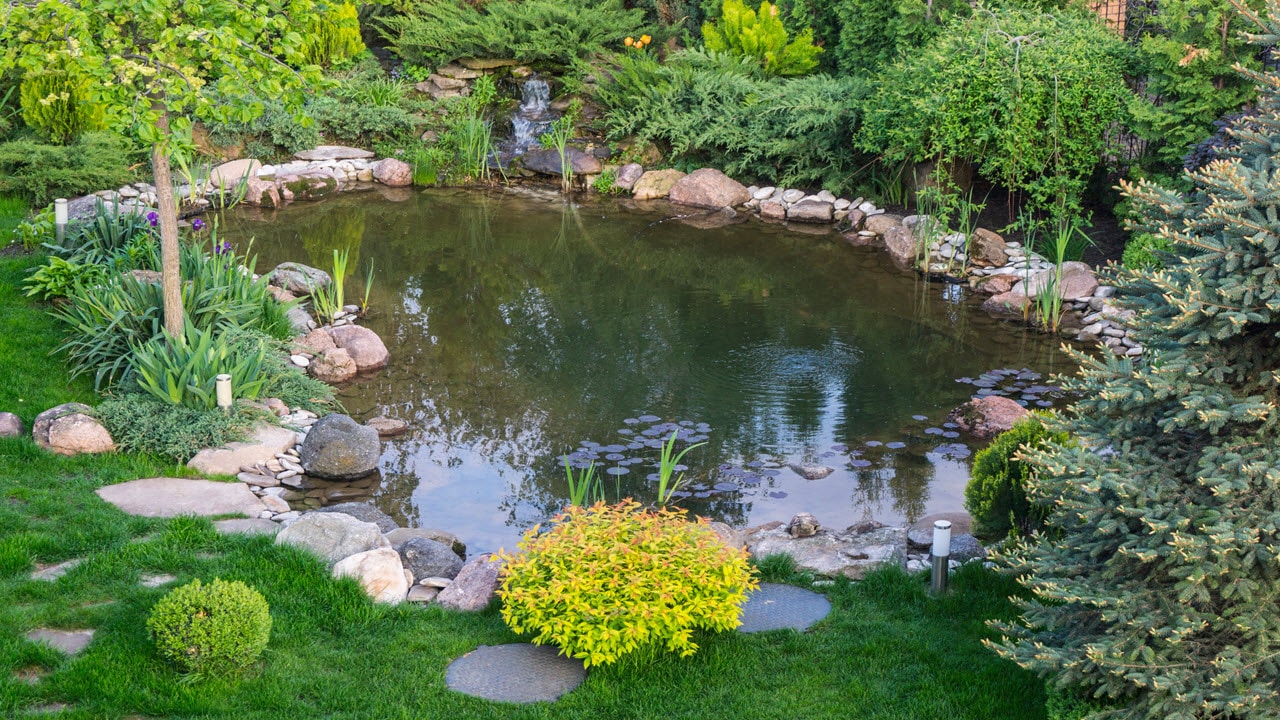
Installing a wetland habitat in your yard is not a very difficult endeavor. Even a small area can become a successful mini wetland! The optimal location is going to be someplace that is near an existing source of water, such as downspouts, or an ephemeral stream from natural runoff. It should also be low-lying areas, perhaps where water already pools and collects. You need to make sure that you can access the wetland for maintenance easily; while they are low maintenance, you should remove excess plant detritus and debris every fall. With a bit of effort, a backyard wetland garden can be a great addition to your landscape, and the local wildlife will thank you!
The following blog post is a summary of the article “NC Bill Includes Bird-friendly Native Plant Policies” published by Audubon North Carolina on June 11, 2025. To read the original article, click here.
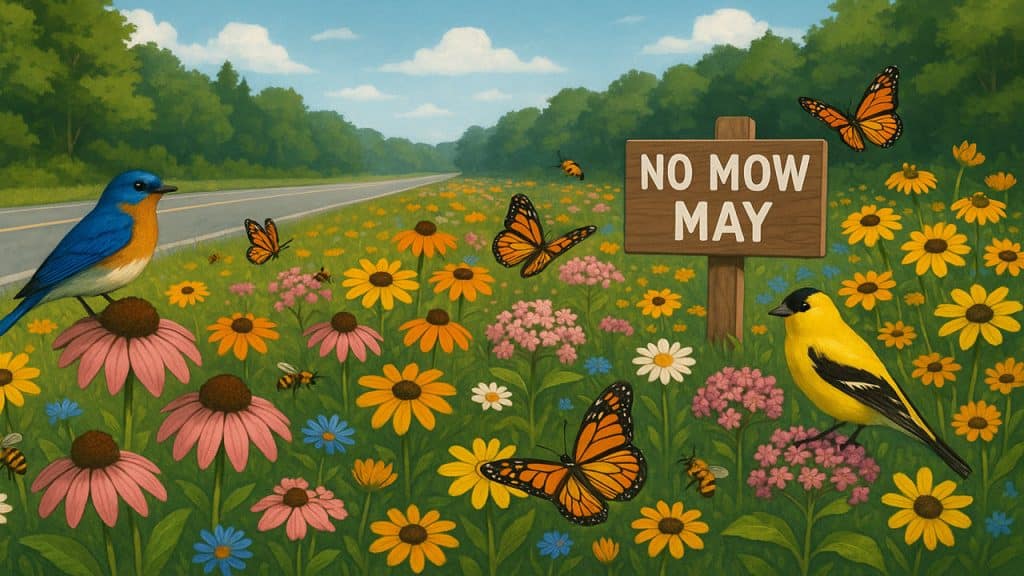
A new legislative effort in North Carolina, Senate Bill 391, is poised to significantly increase the presence of native plants throughout the state. Introduced by Senators Bill Rabon, Vickie Sawyer, and Michael Lazzara, the bill is a product of years of grassroots advocacy spearheaded by Audubon Society chapters. Central to the bill are two main policies: a ban on mowing highway rights-of-way during May—an initiative known as “No Mow May”—and a mandate that native plants be used when vegetation is removed for outdoor advertising purposes. The bill also calls for the development of a comprehensive list of native plants to be prioritized over nonnative species, along with strategies for removing invasive plants from state parks and roadside areas.
Supporters of the bill, like Zach Wallace of Audubon North Carolina, emphasize the ecological benefits of native plants for both wildlife and people. According to Wallace, native flora supports bird populations by providing critical food sources such as insects, which are particularly important for feeding chicks. The cumulative impact of fewer native plants is fewer insects, which negatively affects bird reproduction. These provisions in the bill aim to not only restore natural ecosystems but also enhance biodiversity and environmental health across the state. The backing of figures like Senator Rabon has been key in sustaining the momentum behind these conservation efforts.
This bill builds upon recent pro-environmental actions by the state government, including an executive order from former Governor Roy Cooper mandating native plants for landscaping on all future state-owned projects. North Carolina is home to over 3,900 species of native plants that support birds and pollinators throughout the year, highlighting the critical role of initiatives like No Mow May in preserving early-season pollinator habitats. These plants, in turn, help sustain avian life by providing the necessary resources for raising young. Senate Bill 391, filed on March 24 and currently under review by the Senate Transportation Committee, represents a forward step in ensuring the vitality of North Carolina’s ecosystems for generations to come.
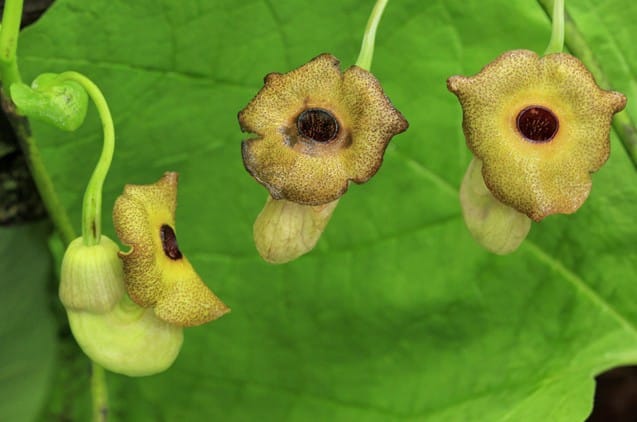
It’s that time of the month again! The time to learn about one of North Carolina’s weird and wonderful plants and animals. For this go around, I decided to focus on a pair of North Carolina species: the pipevine and the pipevine swallowtail butterfly. You cannot really talk about the pipevine plant without talking about the butterfly whose caterpillars feed almost exclusively on it. Pipevine, Aristolochiamacrophylla, is also known as Dutchman’s Pipe, as the flowers resemble the smoking pipes of old. A woody vine with large, heart-shaped leaves, the pipe-like flowers keep a low profile and are brownish-purple in color. These flowers are out through May and June and are primarily pollinated by small flies. Flies are drawn to the flowers by their scent, which varies from species to species of pipevine but often resembles feces, carrion, or fungi. Once inside the flower, they are trapped by the large anthers, and are unable to escape until the anthers burst, scattering their pollen grains onto the insect. The fly, once able to make its escape, leaves covered in pollen but, lured back to another flower by the same odor, cross-pollinates it. This trap-and-release process is a pretty weird and wonderful method of pollination, but it is not the only trick to survival that pipevine has up its sleeve. The leaves are full of aristolochic acids, which are carcinogenic, nephrotoxic, and mutagenic. In essence, these toxins increase the risk of cancer, cause severe kidney damage, and result in DNA damage by mutating your DNA. As a result, most animals do not munch on this plant, aside from the caterpillar stage of one butterfly: the pipevine swallowtail.
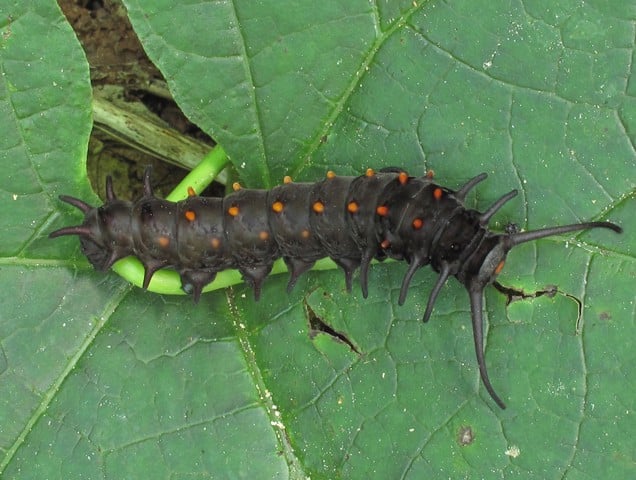
The pipevine swallowtail, Battusphilenor, is found throughout the Southeastern United States. A beautiful insect, with much of the hindwing a shimmering blue, their larval form is quite the spectacle to behold. The pipevine swallowtail caterpillar is usually a dull or dusky black, with fleshy projections that extend from the body. Most caterpillars have reddish-orange warts on their dorsal (back) side; their resemblance to velvet worms is uncanny and may help them avoid predation. Velvet worms are an invertebrate group that feed on other invertebrates by launching strings of slime from a gland on their head and engulfing their prey with slime. Don’t worry, pipevine swallowtail caterpillars are not shooting slime at other critters in your backyard (though how weird and wonderfully cool would that be?!); but if you have a pipevine plant, they will be chomping away on the leaves. They use the aristolochic acids as a defense mechanism: if their looks do not scare you off, their taste will! These chemical compounds, while toxic to humans and most other animals, are utilized by the adult butterflies as well: they can detect their odor, which helps guide them to which plants are suitable for them to deposit their eggs. Beginning in June, you can spot the caterpillars on pipevine plants, and they overwinter in their chrysalis form. You can often find chrysalises attached to pipevine plants throughout the fall and winter. Let them be, and the beautiful adult forms will emerge in the spring.
Pipevine Swallowtail, Battusphilenor, in the caterpillar form. Photograph courtesy of Alan Cressler and Lady Bird Johnson Wildflower Center.
If you are interested in experiencing this weird and wonderful combo, you are in luck! Many native plant nurseries in North Carolina carry Aristolochiamacrophylla, so you can add this flowering vine to your home landscape. Plant it in partial shade in rich, moist soil, then sit back and wait for the pipevine swallowtail butterflies to arrive! The caterpillars won’t be far behind.
The following blog post is a summary of the report Doubling Down on Nature: State of Investment in Nature-based Solutions for Water Security, jointly researched and published by The Nature Conservancy and Forest Trends on June 10, 2025. To read the full report, click here.
On June 10, 2025, The Nature Conservancy (TNC) and Forest Trends published their joint report, Doubling Down on Nature: State of Investment in Nature-based Solutions for Water Security. The report emphasized the critical role that Nature-based Solutions (NbS) can play in addressing the growing global water crisis, especially as climate change intensifies floods, droughts, and water scarcity. 2024 was both the driest and one of the most flood-prone years on record, emphasizing the increasingly erratic nature of the water cycle. As traditional water infrastructure struggles to keep up, NbS—such as wetland restoration, forest protection, and sustainable agricultural practices—offer cost-effective and resilient alternatives. This join report built on Forest Trends’ 2016 report, and it offers the most comprehensive global analysis to date of financing directed toward NbS with water security goals. Importantly, it documents a doubling of investment in NbS for water over the past decade, reaching USD 49.1 billion in 2023, covering more than 880 initiatives globally. Both TNC and Forest Trends argue that combining natural and built infrastructure is no longer optional but is in fact essential for sustainable water management in our changing climate.
From 2013 to 2023, China, the United States, and the European Union accounted for 94% of all global investment in NbS for water, with China alone contributing USD 26.4 billion, or 54% of the global total. While investment is concentrated, regions like Africa and Oceania have shown the fastest growth rates, particularly driven by foreign aid and innovative local programs. The most commonly funded ecosystems included forests and riparian zones, though region-specific ecosystems such as shrublands in China and wetlands in Oceania also received attention. The top water-related risks being addressed globally were, and still are, flooding and water quality, while scarcity is a primary concern in Africa and Latin America. Governments, especially at the national level, provided 97% of all funding, though private sector involvement has grown 30-fold—albeit from a low baseline. The researchers identified public incentives for landholders and other public good investments as the primary mechanisms driving these investments.
The investment mechanisms for funding NbS projects and programs were categorized into five types: public incentives for landholders, public good investments, user-driven watershed investments, water quality trading, and environmental water markets. Public landholder incentives, such as those in China, the EU, and the U.S., accounted for nearly half of global investment and average USD 1.1 billion per program. Other public investments, including grants and localized infrastructure projects, grew even faster, increasing 3.3 times in the past decade. User-driven investments, like those funded by utilities or water user fees, totaled nearly USD 2 billion in 2023 and are growing in countries like France, South Korea, and Vietnam. Market-based approaches like water quality trading and environmental water markets remained small but are developing in the U.S., Australia, and New Zealand. The authors also noted the emergence of financial instruments such as green bonds, debt-for-nature swaps, and private equity, all of which signal a maturing ecosystem for funding NbS for water security.
Researchers found that China’s dominant position was due to long-standing eco-compensation programs and massive government-led initiatives like Sponge Cities and the Cropland to Forest program. Africa saw a fivefold increase in investment, fueled by multilateral institutions and a growing number of water funds. South Africa led domestic public investment, while East Africa attracted the most foreign funding. InLatin America, countries like Peru, Mexico, Ecuador, and Costa Rica continued to expand their Payment for Ecosystem Services (PES) programs, with over 32 water funds now operational or in development. Europe and North America have leveraged EU funding and national incentive programs to scale investments, though upcoming budget cuts threaten future U.S. commitments. This document points out that political instability, regulatory fragmentation, and insufficient long-term funding continue to limit the scale and impact of NbS efforts globally.
Doubling Down on Nature has five key recommendations: (1) build resilient revenue models beyond public subsidies, (2) embed NbS into policy and infrastructure planning, (3) steer private investment toward high-impact solutions, (4) strengthen the delivery ecosystem and data, and (5) empower local and Indigenous leadership. This report, which documented nature-based solutions over a ten-year period, stresses that despite growing awareness, many NbS projects still suffer from weak community engagement, lack of hydrological monitoring, and fragmented standards. Data show that while 74% of projects involve local communities, very few are actually led by them. Moreover, only 12% of projects reported monitoring water quantity or quality, underscoring a gap in evidence for impact. The diversity of standards—over 30 reported in 2023—points to the need for harmonization and efficiency. Nevertheless, The Nature Conservancy and Forest Trends remain optimistic, citing strong momentum, especially in China and Europe, and growing public and political support as the world wakes up to the importance of nature in securing water for future generations.
Gardening with native plants in North Carolina offers more than just natural beauty—it provides a vital lifeline for local wildlife. By incorporating species adapted to the Piedmont, Coastal Plain, or Mountain regions of the state, you can create thriving ecosystems that support birds, butterflies, and other pollinators. The National Wildlife Federation emphasizes that native plant gardens serve as critical habitats, especially as natural spaces shrink due to development. These gardens are not only attractive year-round but are also lower maintenance than traditional lawns and ornamental plantings. They require fewer pesticides, less watering, and minimal fertilizer, making them environmentally sustainable choices for your home garden.
One of the most compelling reasons you should plant with native species is the immediate benefit to birds. A blog post last year from the North Carolina Wildlife Resources Commission highlighted the fact that native plants attract native insects, which are crucial food sources for many bird species, especially during nesting season. For example, oak trees support hundreds of caterpillar species, which in turn feed countless baby birds. Berry-producing shrubs like American beautyberry and winterberry holly also provide essential winter sustenance. So, when you are planning your garden’s layout, try to think vertically and include layers such as groundcovers, shrubs, and canopy trees to maximize habitat diversity. Each layer plays a role in sheltering wildlife and enhancing the ecological integrity of the garden.
The North Carolina Native Plant Society has a directory of native plant nurseries, making it easier than ever to find native plants suitable for your region within the state. Many of the nurseries on the list grow their plants from local seed stock, ensuring that their selections are genetically suited to thrive in your specific region, aka ecotype. The staff who run these nurseries are passionate about their work and will be able to offer you helpful guidance for choosing plants based on light, soil, and moisture conditions. Organizations like the North Carolina Botanical Garden further support gardeners through educational workshops, plant sales, and design templates. These tools are invaluable for both novice and experienced gardeners who want to transition from conventional landscaping to native plant gardening.
Ultimately, gardening with native plants is a meaningful way for people to contribute to biodiversity and climate resilience. It transforms ordinary yards into wildlife sanctuaries and demonstrates how individual actions can have a cumulative environmental impact. Through the Certified Wildlife Habitat Program, offered through the National Wildlife Federation, individuals and organizations can create wildlife-friendly landscapes in their local community. Once your garden has sources of food, water, shelter, places for animals to raise their young, and is managed in a sustainable way, it can qualify as a Certified Wildlife Habitat! As more North Carolinians embrace native gardening, neighborhoods can evolve into networks of mini-refuges that support declining species and reconnect fragmented habitats. Whether you’re planting a meadow in your front yard or adding a few native shrubs to your backyard border, every effort counts in making North Carolina a greener, more wildlife-friendly state.