
The following blog post is a summary of the article “From Kyiv to the Suwałki Gap, bogs return as Europe’s defensive shield” by Zia Weise, Wojciech Kość, and Veronika Melkozerova on August 26, 2025, in Politico. To read the original article, click here.
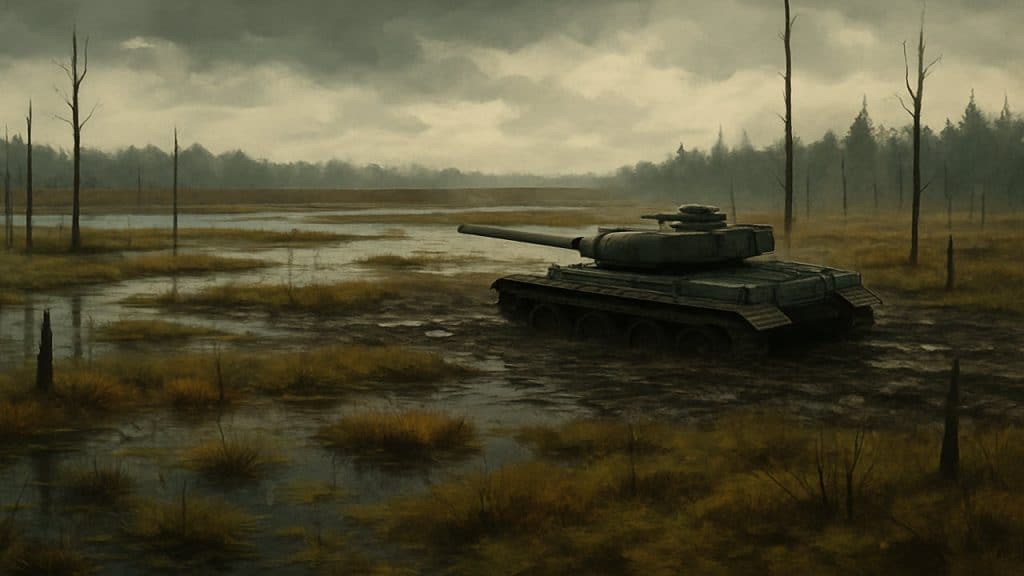
In February 2022, as Russian forces advanced on Kyiv, defense consultant Oleksandr Dmitriev proposed an unconventional but effective strategy. Having organized offroad races in the Irpin River area, he knew the terrain well and understood the impact of restoring the floodplain. By blowing up a dam, Dmitriev allowed water to rush back into the bogs and marshes, turning the land into a swampy trap for enemy vehicles. This tactic successfully halted Russia’s assault from the north, leaving their tanks immobilized in the mud. The images of stranded Russian forces quickly spread, showcasing how nature could serve as an unexpected line of defense.
This wartime lesson is now influencing broader policy across NATO’s eastern flank. Countries such as Finland and Poland are actively exploring bog restoration not just as a defensive measure but also as a climate strategy. Bogs, rich in peat, are known to store massive amounts of carbon dioxide, making them powerful tools in the fight against global warming. Yet, many of Europe’s bogs have been drained for agriculture, releasing greenhouse gases and making terrain more accessible to heavy vehicles. Governments are beginning to see dual benefits in restoring wetlands: slowing climate change while simultaneously creating natural barriers against potential invasions.
The ecological value of bogs extends beyond climate regulation. These unique ecosystems cover only a small portion of the planet but hold a disproportionate share of stored carbon — even more than forests. When drained, however, they release centuries’ worth of carbon emissions, worsening global warming. Restoration efforts across the EU are gaining traction under new environmental laws, with specific targets to rewet and repair degraded peatlands. Scientists argue that bog rehabilitation can be done relatively quickly and cheaply, especially in regions already prone to water saturation. As history shows, such landscapes have repeatedly played decisive roles in warfare by trapping armies and forcing them into vulnerable positions.
Despite its promise, bog restoration faces challenges, particularly from agriculture and local opposition. Farmers are concerned about losing productive land, and some residents fear flooding, even though experts dismiss these worries as exaggerated. To make large-scale projects viable, governments may need to compensate or incentivize farmers to adopt peat-friendly practices. Additionally, while bogs can hinder tanks and trucks, they cannot stop drones or missiles, meaning they must complement rather than replace traditional defense systems. Still, the integration of environmental goals with national security could unlock significant political will and funding, making bogs a central part of Europe’s future strategy for both defense and climate resilience.
#NatureAsDefense #PowerOfTheBog #StrategicLandscapes #BogsFightback #TheSwampSchool