Posted on — Leave a comment

Scaling Natural Resilience: A Global Surge in Investment for Nature-Based Water Security

The following blog post is a summary of the report Doubling Down on Nature: State of Investment in Nature-based Solutions for Water Security, jointly researched and published by The Nature Conservancy and Forest Trends on June 10, 2025. To read the full report, click here.

On June 10, 2025, The Nature Conservancy (TNC) and Forest Trends published their joint report, Doubling Down on Nature: State of Investment in Nature-based Solutions for Water Security. The report emphasized the critical role that Nature-based Solutions (NbS) can play in addressing the growing global water crisis, especially as climate change intensifies floods, droughts, and water scarcity. 2024 was both the driest and one of the most flood-prone years on record, emphasizing the increasingly erratic nature of the water cycle. As traditional water infrastructure struggles to keep up, NbS—such as wetland restoration, forest protection, and sustainable agricultural practices—offer cost-effective and resilient alternatives. This join report built on Forest Trends’ 2016 report, and it offers the most comprehensive global analysis to date of financing directed toward NbS with water security goals. Importantly, it documents a doubling of investment in NbS for water over the past decade, reaching USD 49.1 billion in 2023, covering more than 880 initiatives globally. Both TNC and Forest Trends argue that combining natural and built infrastructure is no longer optional but is in fact essential for sustainable water management in our changing climate.

From 2013 to 2023, China, the United States, and the European Union accounted for 94% of all global investment in NbS for water, with China alone contributing USD 26.4 billion, or 54% of the global total. While investment is concentrated, regions like Africa and Oceania have shown the fastest growth rates, particularly driven by foreign aid and innovative local programs. The most commonly funded ecosystems included forests and riparian zones, though region-specific ecosystems such as shrublands in China and wetlands in Oceania also received attention. The top water-related risks being addressed globally were, and still are, flooding and water quality, while scarcity is a primary concern in Africa and Latin America. Governments, especially at the national level, provided 97% of all funding, though private sector involvement has grown 30-fold—albeit from a low baseline. The researchers identified public incentives for landholders and other public good investments as the primary mechanisms driving these investments.

The investment mechanisms for funding NbS projects and programs were categorized into five types: public incentives for landholders, public good investments, user-driven watershed investments, water quality trading, and environmental water markets. Public landholder incentives, such as those in China, the EU, and the U.S., accounted for nearly half of global investment and average USD 1.1 billion per program. Other public investments, including grants and localized infrastructure projects, grew even faster, increasing 3.3 times in the past decade. User-driven investments, like those funded by utilities or water user fees, totaled nearly USD 2 billion in 2023 and are growing in countries like France, South Korea, and Vietnam. Market-based approaches like water quality trading and environmental water markets remained small but are developing in the U.S., Australia, and New Zealand. The authors also noted the emergence of financial instruments such as green bonds, debt-for-nature swaps, and private equity, all of which signal a maturing ecosystem for funding NbS for water security.

Researchers found that China’s dominant position was due to long-standing eco-compensation programs and massive government-led initiatives like Sponge Cities and the Cropland to Forest program. Africa saw a fivefold increase in investment, fueled by multilateral institutions and a growing number of water funds. South Africa led domestic public investment, while East Africa attracted the most foreign funding. In Latin America, countries like Peru, Mexico, Ecuador, and Costa Rica continued to expand their Payment for Ecosystem Services (PES) programs, with over 32 water funds now operational or in development. Europe and North America have leveraged EU funding and national incentive programs to scale investments, though upcoming budget cuts threaten future U.S. commitments. This document points out that political instability, regulatory fragmentation, and insufficient long-term funding continue to limit the scale and impact of NbS efforts globally.

Doubling Down on Nature has five key recommendations: (1) build resilient revenue models beyond public subsidies, (2) embed NbS into policy and infrastructure planning, (3) steer private investment toward high-impact solutions, (4) strengthen the delivery ecosystem and data, and (5) empower local and Indigenous leadership. This report, which documented nature-based solutions over a ten-year period, stresses that despite growing awareness, many NbS projects still suffer from weak community engagement, lack of hydrological monitoring, and fragmented standards. Data show that while 74% of projects involve local communities, very few are actually led by them. Moreover, only 12% of projects reported monitoring water quantity or quality, underscoring a gap in evidence for impact. The diversity of standards—over 30 reported in 2023—points to the need for harmonization and efficiency. Nevertheless, The Nature Conservancy and Forest Trends remain optimistic, citing strong momentum, especially in China and Europe, and growing public and political support as the world wakes up to the importance of nature in securing water for future generations.

#NatureBasedSolutions #GreenInfrastructure #WetlandsStoreCarbon #WetlandsCleanOurWater #WetlandsMitigateFlooding #WetlandWednesday #TheSwampSchool

Posted on — Leave a comment

Gardening with Native Plants in North Carolina: Creating a Sanctuary for Wildlife

Illustration of a garden filled with native wildflowers and wild birds.

Gardening with native plants in North Carolina offers more than just natural beauty—it provides a vital lifeline for local wildlife. By incorporating species adapted to the Piedmont, Coastal Plain, or Mountain regions of the state, you can create thriving ecosystems that support birds, butterflies, and other pollinators. The National Wildlife Federation emphasizes that native plant gardens serve as critical habitats, especially as natural spaces shrink due to development. These gardens are not only attractive year-round but are also lower maintenance than traditional lawns and ornamental plantings. They require fewer pesticides, less watering, and minimal fertilizer, making them environmentally sustainable choices for your home garden.

One of the most compelling reasons you should plant with native species is the immediate benefit to birds. A blog post last year from the North Carolina Wildlife Resources Commission highlighted the fact that native plants attract native insects, which are crucial food sources for many bird species, especially during nesting season. For example, oak trees support hundreds of caterpillar species, which in turn feed countless baby birds. Berry-producing shrubs like American beautyberry and winterberry holly also provide essential winter sustenance. So, when you are planning your garden’s layout, try to think vertically and include layers such as groundcovers, shrubs, and canopy trees to maximize habitat diversity. Each layer plays a role in sheltering wildlife and enhancing the ecological integrity of the garden.

The North Carolina Native Plant Society has a directory of native plant nurseries, making it easier than ever to find native plants suitable for your region within the state. Many of the nurseries on the list grow their plants from local seed stock, ensuring that their selections are genetically suited to thrive in your specific region, aka ecotype. The staff who run these nurseries are passionate about their work and will be able to offer you helpful guidance for choosing plants based on light, soil, and moisture conditions. Organizations like the North Carolina Botanical Garden further support gardeners through educational workshops, plant sales, and design templates. These tools are invaluable for both novice and experienced gardeners who want to transition from conventional landscaping to native plant gardening.

Ultimately, gardening with native plants is a meaningful way for people to contribute to biodiversity and climate resilience. It transforms ordinary yards into wildlife sanctuaries and demonstrates how individual actions can have a cumulative environmental impact. Through the Certified Wildlife Habitat Program, offered through the National Wildlife Federation, individuals and organizations can create wildlife-friendly landscapes in their local community. Once your garden has sources of food, water, shelter, places for animals to raise their young, and is managed in a sustainable way, it can qualify as a Certified Wildlife Habitat! As more North Carolinians embrace native gardening, neighborhoods can evolve into networks of mini-refuges that support declining species and reconnect fragmented habitats. Whether you’re planting a meadow in your front yard or adding a few native shrubs to your backyard border, every effort counts in making North Carolina a greener, more wildlife-friendly state.

#GardeningWithNatives #CertifiedWildlifeHabitat #BringNatureHome #SustainableGardening #RegenerativeLandscaping #GardenWithPurpose #TheSwampSchool

Posted on — Leave a comment

North Carolina’s Weird and Wonderful: Spiny Softshell Turtle

Illustration of a spiny softshell turtle on a riverbank.

Well, Turtle Month 2025 came to a close last week with World Turtle Day on May 23rd. We learned how to safely help a turtle cross the road: always place them in the direction they are going and never turn them around. We shared our first experiences with turtles, ranging from individuals’ childhood backyards to zoos, nature centers, aquariums, and museums across the globe. The whole world celebrated turtles and tortoises in all their glory! To properly wrap this month up, this edition of North Carolina’s Weird and Wonderful will be on, of course, a turtle: the Spiny Softshell, Apalone spinifera. 

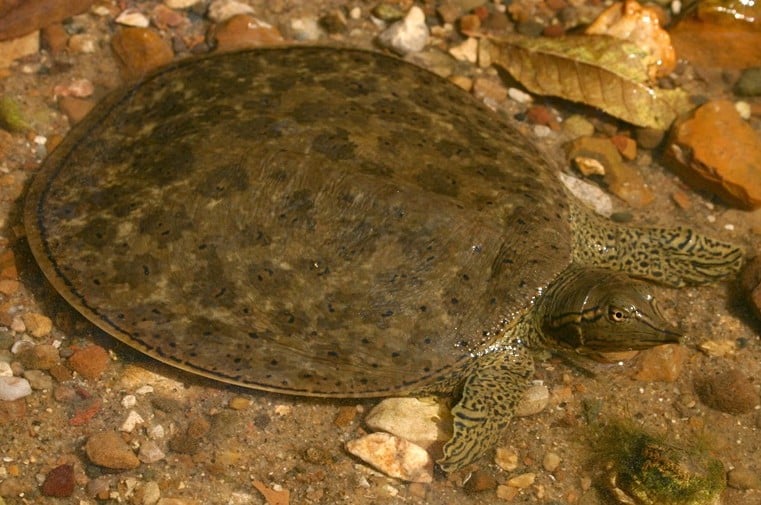
The spiny softshell turtle cannot be confused with any of the other turtle species in North Carolina. Instead of having a hard carapace composed of bone covered with scutes comprised of keratin, this species has a bony carapace covered in tough, leathery skin. The skin often has a texture described as sandpiper-like, and the carapace has well-defined black spots for juveniles and males, while females have indistinct blotches. Overall, these turtles range in color from yellow brown to olive gray, with very long necks and a long, thin nose. Spiny softshell turtles will use this nose as a snorkel to breathe underwater, often burying themselves in the sand and extending it upward towards the water’s surface. The “spiny” part of their name comes from the fact that they have spines, or tubercles, along the front edge of their carapace. This, and the fact that they have patterned feet, help distinguish them from a similar North American species, the Florida softshell turtle. 

Apalone spinifera, Spiny Softshell Turtle. Photo courtesy of Todd Pierson and Herps of NC.

There are two subspecies of these weird and wonderful-looking turtles in North Carolina. The Eastern Spiny Softshell, Apalone spinifera spinifera, has been found primarily in the French Broad River system in Western North Carolina. The Gulf Coast Spiny Softshell, Apalone spinifera aspera, has been found in all the Atlantic drainage systems south and west of the Cape Fear River. All spiny softshell turtles occur in large streams and rivers that have sandy bottoms or mud bars, in which they can bury themselves. These creatures also enjoy basking on logs and are very strong swimmers; spending most of their time in the water, the few times they are on land, they can move very quickly. Females lay clutches of 12-18 round eggs during the early summer months in nests that are often very close to the water. Usually, the nests are on sand bars or sandy banks, but they have been found in people’s yards on occasion. After approximately 80 days, the hatchlings emerge, measuring 1-1.5 inches across. Carnivorous, these turtles consume aquatic invertebrates, crayfish, fish, and other aquatic critters.

Apalone spinifera, Spiny Softshell Turtle. Photo courtesy of Pierson Hill and North Carolina Wildlife Resources Commission.

While incredibly unique, not much is known about the state of the spiny softshell turtles in North Carolina. Due to this lack of knowledge and their limited range, they are listed as a species of Special Concern in the state. The North Carolina Wildlife Resources Commission, in April of this year, released a statement asking for the public’s help. Anyone who has seen these turtles in the wild is encouraged to submit a sighting report. With the data they collect, the NCWRC is hoping to learn more about their distribution, identify potential areas for future monitoring, and perhaps even identify new populations. So, the next time you are walking along the Cape Fear River or the French Broad River, keep your eyes peeled in areas with sandy banks and sandbars. There could be some spiny softshell turtles buried beneath the water’s surface, using their weird and wonderful nose to snorkel undetected. 

#NorthCarolinasWeirdandWonderful #SpinySoftshellTurtle #TurtleMonth2025 #WorldTurtleDay2025 #TurtleConservation #TurtleSurvivalAlliance #AmericanTortoiseRescue #SwampSchool

Posted on — Leave a comment

Lake Phelps and Pettigrew State Park: History & Nature Intertwined

Illustration of Lake Phelps with three ancient dugout canoes in the foreground and Somerset Plantation in the background in Pettigrew State Park.

Did you know the month of May is Preservation Month in the United States? No, I am not talking about homemade jams and jellies, I am referring to historical preservation. National Historic Sites encompass buildings, battlefields, city blocks, and even whole towns within the U.S. There is even a National Historic Site located outside of our country’s borders all the way in Morocco! As I discussed last year in my blog posts about The Great Dismal Swamp and Jordan Lake, there are many natural spaces within North Carolina that are also home to a rich cultural history. Another such interesting place is Pettigrew State Park.  

Located in Tyrrell and Washington Counties, North Carolina, this state park is primarily composed of Lake Phelps, one of the state’s famous pocosins, also known as Carolina Bays. This pocosin was undiscovered by European settlers until 1755, when two local hunters and adventurers journeyed into the dense forest to find game and scope out promising farmland. One of the men climbed a tree and saw the lake; another, a man by the name of Josiah Phelps, ran into the water, declaring it was to be named after him.  However, the indigenous groups in the region had known about the lake’s existence for centuries prior to this “discovery”. Archaeological research performed in and around Lake Phelps has revealed at least thirty log canoes sunken in the lake, with one being the longest known indigenous dugout canoe in the southeastern United State, measuring 36 feet in length. Another of the canoes is the second oldest in the nation, with radiocarbon dating placing it around 2400 B.C.E. It is hypothesized that the Algonquian tribe would sink their canoes in the shallow water to store and protect them until they came back to the pocosin during the following year. Thousands of other relics have been recovered from in and around the lake, emphasizing the point that the pocosin, and the surrounding forests, have been used for centuries. 

So, what exactly is a pocosin? A pocosin is a unique wetland that has formed due to the accumulation of organic matter in broad, low-lying shallow basins. The build-up of organic material, which happens over thousands of years, causes the soil to be highly acidic and nutrient deficient. Pocosins are typically found along the Atlantic coastal plain and were a prominent ecosystem in the southeastern U.S. in the past, though development has destroyed most of them. While many believe these wetlands are not useful and would better serve humanity in the form of farmland or real estate developments, in actuality, pocosins protect communities by lessening the severity of wildfires; providing flood control in low-elevation areas; improving the local water quality; and sequestering carbon, nitrogen, and mercury. For all of you bird enthusiasts out there, pocosins are very important for overwintering bird populations, as the shrub-dominated environment provides them with much needed space in which to nest.  

Lake Phelps is no exception. The body of water itself is fairly shallow, with the deepest portions measuring 9 feet deep. The pocosin depends on rainfall for its water supply and is home to many species of plants and animals, including the aforementioned birds but also bladderworts, sundews, and the occasional red wolf. The unique biology of the pocosin and its surrounding habitats would be, in my mind, reason enough to put state protections into place. However, it was the plantation located near Lake Phelps that eventually led to the North Carolina General Assembly acquiring and designating the land as the state’s sixth state park. In 1787 Josiah Collins, an immigrant from England, developed the land surrounding the lake into farm fields. He used his enslaved population to dig a six-mile canal that connected the lake to the Scuppernong River, which resulted in the draining of swampland located between the two bodies of water. The Civil War put an end to the plantation’s productivity and, with assistance from the federal government, North Carolina gained control of the plantation towards the end of the 1930s. The legislature decided to name the chunk of land containing the lake and the plantation Pettigrew State Park (after a Confederate general who had lived down the road) and began restoring the plantation home and surrounding property. 

It was not until 1947 that the state gained permanent ownership of the land and officially established the state park. Originally, the Works Progress Administration’s (WPA) plan for the property was to turn it into one of their homestead communities. These New Deal Farm Colonies, as they were known, were created with the goal of providing poor farming families with better land and more autonomy during the Great Depression. These were created across the United States, and some continued to thrive long after their New Deal creation. Others, like Scuppernong Farms on Lake Phelps, turned into other things. In this case, while the WPA and Civilian Conservation Corps were constructing the homesteads, they were also turning portions of the property into a park. Overtime, the homestead buildings were taken over for park use, and the Scuppernong Farms homestead community faded away before it ever really got started.  

More land was acquired and added to the park property during the 1960s, 1980s, and 1990s, in an effort to preserve some of the last remaining acres of unharvested pocosin forest and the wildlife that inhabit it. By that time, North Carolina had started to realize the importance and uniqueness of pocosins. The fact that Lake Phelps directly abutted a state historic site made the argument to acquire more land and enlarge the park an easier sell. Today, park visitors can enjoy the camping amenities, go on hikes along one of the five trails, and enjoy taking in the views of the local flora and fauna. The preservation of a historic site allowed for this gem of an ecosystem to be preserved, too. It is important to remember that humans and the environment in which we live have been interacting with each other for thousands of years; protecting natural resources often means protecting sites important to our shared past, and vice versa. So, the next time you are trying to decide the next place in our state to explore, consider heading over to Lake Phelps. You will see one of the last remaining pocosin forests in the state, and two of the canoes that archaeological excavations uncovered in the lake, making Pettigrew State Park one of the wonderful blends of natural and cultural resources in North Carolina. 

#PocosinWetlands #LakePhelps #PettigrewStatePark #NorthCarolinaNaturalandCulturalResources #PreservationMonth #SwampSchool

Sources:

Pettigrew State Park. NCpedia and North Carolina Division of Parks and Recreation. 2023.

Phelps Lake Canoes. Dr. Mark Wilde-Ramsing. Underwater Unit, North Carolina Office of State Archaeology. 1992.

The Legacy of New Deal Farm Colonies in North Carolina. ArcGIS Story Map. 2023.

Posted on — Leave a comment

Ancient Survivors: The Fight to Protect the Suwannee Alligator Snapping Turtle

This blog post is a summary of the article “Securing the future of the Suwannee’s ‘mythical’ turtle” by Rose Schnabel, published by WUFT Studios on April 25, 2025. To read the original article, click here.

Travis Thomas’ journey with alligator snapping turtles began in his youth on the Santa Fe River, where his fascination with reptiles was sparked. At just 23 years old, he was introduced to fieldwork by Jerry Johnston, a professor at Santa Fe College with a deep interest in turtles. Their initial adventure led Thomas to lift a 65-pound alligator snapping turtle from the water, igniting a lifelong passion. Two decades later, Thomas became a research assistant professor at the University of Florida’s Nature Coast Biological Station and an authority on these prehistoric reptiles. His major contribution was leading the team that identified the Suwannee alligator snapping turtle as a separate species in 2014 and helping secure its federal protection in 2023.

Thomas and Johnston’s early fieldwork was humble but determined. They cobbled together basic supplies, including a failing canoe nicknamed the “red rocket,” and set out to find the elusive turtles. Their excitement peaked when they finally captured a specimen and observed its ancient, formidable features. Over time, the team expanded and collected evidence that the Suwannee River turtles were distinct from their western counterparts. Thomas’s academic work at the University of Florida and Florida Fish and Wildlife Conservation Commission helped confirm their uniqueness. In 2014, the species Macrochelys suwanniensis was officially recognized, its divergence traced back millions of years to Florida’s prehistoric past.

Despite this success, challenges for the Suwannee alligator snapping turtle remain. Though spared from the widespread commercial harvesting of the 20th century, habitat degradation now threatens their survival. Water extraction has severely reduced river flows, destroying the habitats juvenile turtles rely on and disrupting the food web. While the turtles are generalist feeders, the environmental changes threaten their prey and breeding areas. Conservationists, including Elise Bennett of the Center for Biological Diversity, stress that these changes reflect broader concerns about water quality and the fragility of Florida’s ecosystems—even in areas considered pristine.

Although the species gained threatened status under the Endangered Species Act, the lack of a critical habitat designation has stirred controversy. The U.S. Fish and Wildlife Service cited poaching risks as a reason to avoid identifying specific locations, a rationale Thomas and others criticized. Advocates like Bennett argue that critical habitat protections are essential, especially with looming regulatory changes that could weaken legal definitions of habitat “harm.” This could open the door to more development in sensitive areas. Nonetheless, the resilience of both turtles and researchers endures—highlighted by a poignant moment when Thomas and Johnston recently recaptured the very first turtle they had tagged 20 years earlier, thriving and heavier than ever.

#ESA #SuwanneeRiver #TurtleMonth #WorldTurtleDay #SwampSchool

Posted on — 1 Comment

Waters of the State: Comparing State and Territorial Regulations to Federal WOTUS Standards

Navigating the complexities of water regulations across the United States can be challenging, particularly given the varying approaches states and territories take in comparison to federal Waters of the United States (WOTUS) standards. Recent shifts in federal guidelines, including key Supreme Court rulings like the Sackett II decision and subsequent guidance from the U.S. Army Corps of Engineers (USACOE) and the Environmental Protection Agency (EPA), highlight the importance of understanding these differences. This post explores how each state and territory defines and regulates waters within their jurisdictions relative to federal requirements.

States and Territories Exceeding Federal WOTUS Regulations

These states and territories have chosen to implement regulations that provide broader protection than federal standards, often including protections for isolated wetlands, ephemeral streams, and smaller water bodies.

States:

  • California: Under the Porter-Cologne Water Quality Control Act, California defines “waters of the state” broadly to include all surface and groundwater, ensuring protection beyond federal standards. The act regulates discharges through NPDES permits and WDRs, mandating the prevention of water degradation and committing the state to maintain the highest reasonable water quality.
  • Colorado: Colorado uses state policies to regulate wetlands no longer covered federally, defining “waters of the state” to include all streams, rivers, lakes, and wetlands, with a focus on ephemeral streams and isolated wetlands.
  • Connecticut: Connecticut empowers municipalities to extensively regulate wetlands and watercourses, with House Bill 7174 (introduced March 6, 2025) aiming to strengthen protections for wetlands, watercourses, riparian buffers, and address habitat preservation and development impacts.
  • Delaware: Delaware extensively protects tidal and non-tidal wetlands, including isolated wetlands, recognizing past losses from unregulated activities. The state’s policy emphasizes preserving wetlands to protect the environment, economy, recreation, and flood control, while respecting private property rights.
  • Florida: Florida strengthens protections through the Environmental Resource Permit program and Section 404(g) authority, requiring permits for activities like well construction, development, and work near wetlands to ensure environmental protection and compliance.
  • Hawaii: Maintains stringent regulations protecting all waters within state boundaries, focusing on ecosystem preservation, water quality, and biodiversity.
  • Illinois: Illinois is advancing legislation to protect waters impacted by federal rollbacks, with the Interagency Wetland Policy Act of 1989 aiming to safeguard isolated wetlands and prevent overall wetland loss by regulating state agency actions.
  • Indiana: Indiana exceeds Clean Water Act (CWA) standards by applying specific water quality standards to surface waters in both the Great Lakes and Mississippi River systems. The state classifies its waters into three categories and conducts triennial reviews as required by Section 303(c) of the CWA. Indiana’s standards, approved by the EPA, are more tailored and region-specific than the federal baseline.
  • Maine: Maine provides strong regulatory oversight for ecologically important wetlands through federal, state, and local management, primarily under the Clean Water Act, the 1988 Natural Resources Protection Act, and local zoning laws.
  • Maryland: Maryland broadly protects all surface and groundwater, including isolated wetlands and streams, through its Wetlands and Waterways Protection Program, regulating activities like draining and dredging to prevent loss and degradation.
  • Massachusetts: Massachusetts exceeds federal standards by extensively regulating waters near wetlands, rivers, and coasts through the Wetlands Protection Act and local laws, requiring permits for any alterations to protected areas.
  • Michigan: Utilizes the Michigan Wetlands Protection Act to regulate a comprehensive range of wetlands, lakes, rivers, and ponds, having also assumed Section 404(g) authority. Under Part 303, wetlands in Michigan are regulated if they are near or connected to the Great Lakes, Lake St. Clair, or inland water bodies, or if they are over 5 acres in size. Smaller, isolated wetlands may also be regulated if deemed critical to preserving the state’s natural resources by EGLE, with proper notice to the property owner.
  • Minnesota: Minnesota ensures broad wetland protection through mandatory mitigation for all impacts, balancing agricultural drainage with preservation under laws like the Wetland Conservation Act, and supporting diverse wetland types beyond federal requirements.
  • New Jersey: New Jersey protects waters under the Freshwater Wetlands Protection Act and Section 404(g) authority, aiming to balance private property rights with the public benefits of preserving inland waterways and freshwater wetlands.
  • New York: New York protects smaller wetlands and important habitats beyond federal standards under the Freshwater Wetlands Act, aiming to preserve natural benefits while supporting economic, social, and agricultural development.
  • Ohio: Ohio extensively protects isolated wetlands through a rigorous permitting process administered by the Ohio EPA, ensuring state-level oversight following reduced federal protections after the 2001 SWANCC decision.
  • Oregon: Oregon operates a state-managed removal-fill permit system that protects wetlands, lakes, rivers, and streams beyond federal standards. Most projects moving over 50 cubic yards of material in these areas require a permit, with stricter regulations for sensitive areas like Essential Salmonid Habitat and Scenic Waterways. The system safeguards ecological functions and applies to activities like building docks, land development, stream bank stabilization, and dredging.
  • Pennsylvania: Pennsylvania’s Clean Streams Law, guided by Chapter 105 regulations, protects streams, rivers, lakes, ponds, and wetlands. It regulates pollution, sewage, industrial discharges, and mining impacts to safeguard water quality for public health, aquatic life, industry, and recreation, while also enforcing penalties and supporting local pollution control efforts.
  • Rhode Island: Rhode Island protects freshwater wetlands, isolated wetlands, and coastal waters through state-specific regulations. The plan emphasizes climate change adaptation and environmental justice, aligning with the RIDEM Strategic Plan for FY24–26, and calls for integrating climate science and equity considerations into all environmental decisions.
  • Vermont: Vermont enforces strong wetland regulations focused on buffer zones and habitat integrity for lakes, rivers, streams, and ponds. Recent updates enhance clarity, public engagement, and transparency by refining wetland classification, improving map accessibility, and introducing new public notice requirements for wetland determinations and changes.
  • Virginia: Virginia provides robust protections for tidal and non-tidal wetlands, significantly exceeding federal coverage to ensure environmental resilience.
  • Washington: Washington maintains strong ecological protections for all state waters, independent of federal rules. Despite a recent U.S. Supreme Court decision narrowing federal wetland protections, Washington’s stricter environmental laws ensure continued safeguards for wetlands, endangered species, and tribal lands.

Territories:

  • American Samoa, District of Columbia, Guam, Northern Mariana Islands, Puerto Rico, and U.S. Virgin Islands all exceed federal standards, broadly defining jurisdictional waters to include coastal and inland wetlands, streams, and marine habitats.

States and Territories Aligning with Federal WOTUS Regulations

These states adhere closely to federal definitions and restrictions, often limiting their regulatory authority to federally defined waters. They frequently utilize definitions directly aligned with or identical to federal WOTUS guidelines, which can leave certain waters unprotected following federal rollbacks.

States:

  • Alabama, Alaska, Arizona, Arkansas, Georgia, Idaho, Indiana, Iowa, Kansas, Kentucky, Louisiana, Mississippi, Missouri, Montana, Nebraska, Nevada, New Hampshire, New Mexico, North Carolina, North Dakota, Oklahoma, South Carolina, South Dakota, Tennessee, Texas, Utah, West Virginia, Wisconsin, Wyoming.

Territories:

  • Currently, no major U.S. territory strictly aligns with federal standards, as all have chosen broader protective measures.

Understanding the Implications

The divergence in regulatory approaches among states and territories carries significant environmental and practical implications. States exceeding federal protections are positioned to better conserve biodiversity, maintain water quality, and mitigate impacts from floods and climate change through comprehensive environmental management strategies.

In contrast, states aligning strictly with federal standards may face increased environmental risks. The recent USACOE and EPA guidance memo (March 12, 2025), responding to the 2023 Supreme Court Sackett II decision, further narrowed federal wetland definitions, reducing federal protections significantly. As a result, states not extending beyond these federal guidelines risk substantial ecological losses, diminished biodiversity, and reduced capacity for climate adaptation and resilience.

Overall, these developments highlight the growing importance of state-level environmental leadership and policy innovation in safeguarding water resources. Stakeholders, policymakers, and communities must remain informed and engaged to advocate for effective water resource management tailored to local ecological and societal needs.

Posted on — Leave a comment

U.S. EPA and Department of the Army: “Waters of the United States” Listening Sessions for Agricultural and Industry Stakeholders

WOTUS, or “waters of the United States,” is an issue of great national importance as it establishes the geographic scope of federal jurisdiction under the Clean Water Act. The EPA and the USASCOE are reviewing the definition to ensure it follows the law, reduces red tape, cuts overall permitting costs, and lowers the cost of doing business in communities nationwide, and inviting public input through a series of listening sessions.

EPA and the Department of Army conducted a hybrid webinar listening session on May 1, 2025 for industry and agricultural stakeholders on Zoom and in person at EPA facilities in Washington at the Federal Triangle Campus. In case you missed it we have a video recording of the EPA/COE presentation and an audio recording of the stakeholder comments.

A copy of the slides the EPA provided can be downloaded by clicking the button below.

The video is the EPA’s introduction.

The audio file of the stakeholders comments

Posted on — Leave a comment

Restoring Mangroves: Reviving Coastal Ecosystems for a Sustainable Future

The following blog is a summary of the article “Restoring Nature’s Coastal Guardians” published on April 2, 2025, in Arbor Day for their March/April issue. To read the original article, click here.

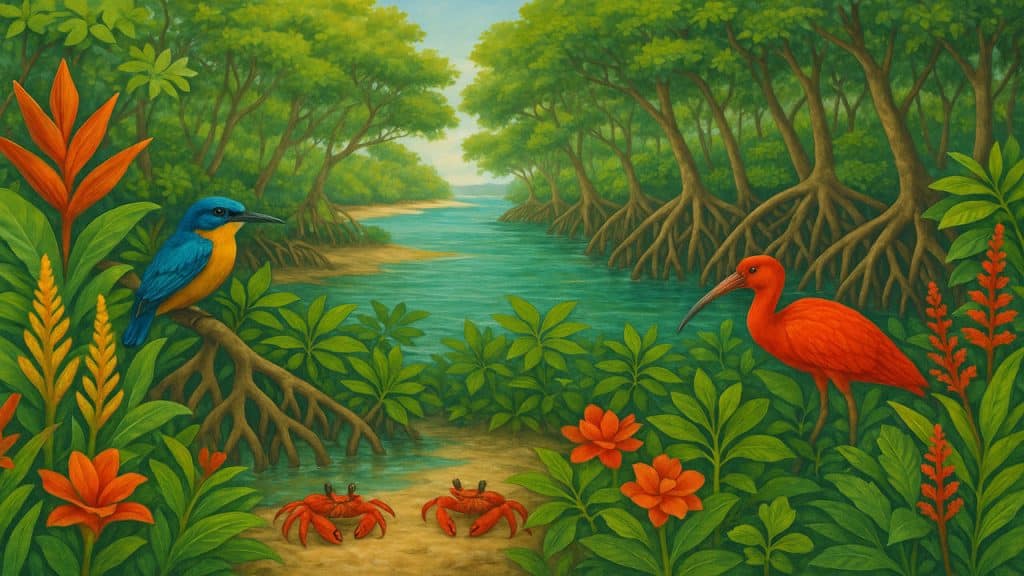
Mangrove forests are remarkable ecosystems found along tropical and subtropical coasts, distinguished by their unusual appearance and critical ecological roles. Their above-ground root systems, mix of saltwater and freshwater, and rich biodiversity make them unique among forest types. Unfortunately, these forests have been widely devastated due to human interference and environmental pressures. Recognizing the urgent need for action, the Arbor Day Foundation is collaborating with various local and global partners to spearhead mangrove restoration efforts. This initiative aims to preserve these vital environments and restore their essential services to nature and humanity.

These forests serve multiple functions that are crucial for both the environment and local communities. Mangroves filter freshwater before it enters the ocean, improving water quality and contributing to marine health. They also protect coastlines from storm surges and erosion, acting as natural barriers against extreme weather. Furthermore, mangroves provide critical habitats for many species, supporting fisheries that sustain nearby populations economically and nutritionally. Another key benefit is their role in carbon sequestration, making them invaluable assets in the fight against climate change.

Despite these benefits, mangrove ecosystems have suffered extensive damage from logging and aquaculture, especially shrimp farming. These activities have stripped coastlines of protective vegetation, triggering a cascade of ecological and socioeconomic problems, including the decline of fish populations and the collapse of local livelihoods. Technology-driven partners like veritree are stepping in to support restoration, using innovative solutions to reverse this decline. To combat these trends, the Arbor Day Foundation has helped plant over 2 million mangrove trees and is continuing restoration projects in countries like Guatemala and Kenya. These efforts promise to revive coastal ecosystems, improve biodiversity, and secure sustainable futures for communities and the planet alike.

Posted on — Leave a comment

North Carolina’s Weird and Wonderful: Eastern Hercules Beetle

Spring has sprung in North Carolina. We have had our annual month-long experience of pollen coating everything, and now wildflowers are blooming, birds are singing, and the insects are waking up. I’ve already seen a few butterflies flitting about. Now, I know some of you are probably Lepidopteran fans, but me, I’m a Coleoptera person. For anyone unfamiliar with this lingo, Lepidoptera is the insect order containing butterflies and moths, while Coleoptera is the order containing beetles. I will probably discuss some of the more strange and unusual moths and butterflies in the future, but today, the time has come to talk about one of my favorite insect species, Dynastes tityus, otherwise known as the Eastern Hercules Beetle. 

Male Dynastes tityus, the Eastern Hercules Beetle. Photo by Arthur B. Evans

The Eastern Hercules Beetle has the honor of being the largest beetle in the Eastern United States, coming in at 1 ½ -2 ½ inches in length. The color varies and depends on the moisture content in the environment. In dry conditions, these beetles are yellow-green to olive green in color; in wetter conditions, they are varying degrees of brown, depending on how much water they have absorbed. When humidity is very high, water will replace air in the voids within their body, leading to an increase in water absorption. If that wasn’t weird and wonderful enough, the pattern of spots and blotches on their elytra, the hard, outer wing covers, are thought to be unique to each individual. Thus, different individual adult beetles can be differentiated from one another. For anyone familiar with North American box turtle species, this is similar to how their unique shell patterns are used to tell each turtle apart, which is helpful for population studies in their native habitats.  

Male Dynastes tityus peeling back the bark on an ash tree branch. Photo by John Bunch originally published in Banisteria.

Male Eastern Hercules Beetles have a large horn on their head that extends past their face, with three smaller horns on their pronotum, the dorsal body part sandwiched between the head and the elytra. Female Eastern Hercules Beetles lack horns and lay their eggs during the month of August, utilizing cavities at or near the base of several hardwood tree species, with large oaks tending to be the tree of choice. Once the larvae hatch, they feed on crumbling heartwood and rotten wood debris found in the cavity, and it can take as long as 2-3 years for them to pupate and turn into adult beetles. Adults feed on overripe and rotting fruit and tree sap, with ash tree species being a favorite. Indeed, a species observations note published in Entomological News way back in 1915 detailed 387 live specimens collected from a single ash tree! What an awesome sight that must have been to behold! The adult beetles grip a branch, peel the bark back, and feed on the resulting juices. Other insects may also get in on the fun and drink from the same scratch mark alongside an Eastern Hercules Beetle. Sadly, due to the invasive Emerald Ash Borer, a fellow beetle species, ash tree species all over the United States are dying. It is feared that the population of Eastern Hercules Beetle will dwindle, as there does not seem to be another group of tree species they favor as much for food as the ash group. There are treatments out there that have proven effective at treating and protecting ash trees from an Emerald Ash Borer infestation, so hopefully the ash tree population will begin to grow, and this big, beautiful bug, the Eastern Hercules Beetle, will be able to live its life in peace. The next time you stumble upon an ash tree in the summer, take a closer look. You might see some of these weird and wonderful beetles enjoying a cool drink on a hot day. 

Posted on — Leave a comment

Growing Greener: The U.K.’s Shift from Peat to Sustainable Horticulture

The following blog is a summary of the article “A Future without Peat” by Neville Stein published in Nursery Management magazine in the February 2025 print edition. To read the original article, click here.

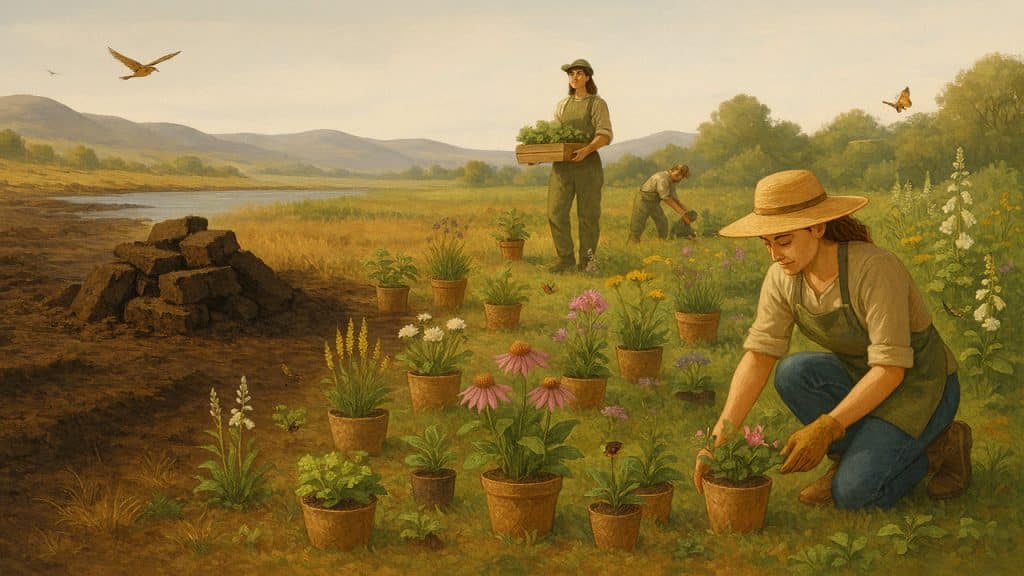
The United Kingdom possesses approximately 7.4 million acres of peatland, which represents about 10% of its total land area. Peat has traditionally been valued in horticulture for its favorable properties, such as low pH and high water and air retention capabilities. However, these peatlands are now recognized as crucial carbon sinks and important habitats for rare wildlife. As environmental awareness has grown, the U.K. government has initiated a phased ban on peat use, starting with retail sales of peat compost in 2025 and extending to a complete ban by 2030. While some exemptions will exist for growing methods without viable alternatives, the move marks a significant shift in horticultural practices.

Despite the looming deadlines, many nursery stock growers in the U.K. have already reduced their dependence on peat. This shift has been encouraged not only by government policies but also by consumer demand and organizations like the National Trust advocating for peat-free products. The industry has made considerable progress, with peat now comprising less than half the amount used in growing media two decades ago. This proactive adaptation indicates that the sector is on track to meet the upcoming restrictions. However, switching to peat alternatives has introduced new complexities that growers must navigate.

Alternatives like wood fibre, bark, coir, and green waste each come with unique challenges, particularly in water and nutrient management. These materials tend to dry out faster, can be difficult to rehydrate, and may deceive growers and consumers into overwatering, which in turn leads to nutrient leaching. Growers now face higher costs and the need to master new cultivation methods, while retailers must adapt their care routines to maintain plant quality on display. Furthermore, educating consumers on proper care of peat-free plants is essential to ensure gardening remains a rewarding experience. While these transitions pose significant challenges, the adaptability shown by U.K. businesses and consumers offers hope for a successful, environmentally responsible future.