
The following blog is a summary of the article “A Future without Peat” by Neville Stein published in Nursery Management magazine in the February 2025 print edition. To read the original article, click here.
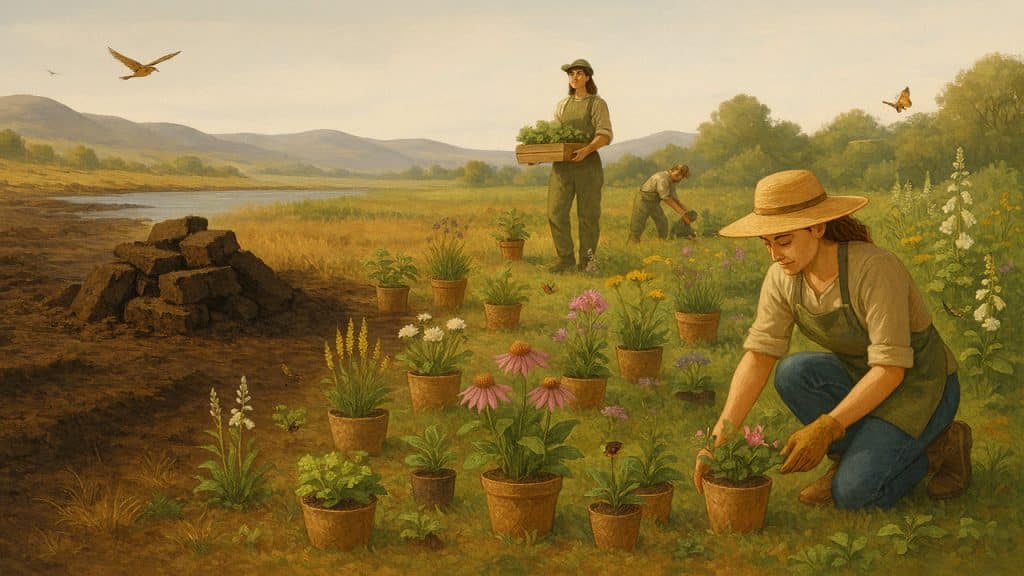
The United Kingdom possesses approximately 7.4 million acres of peatland, which represents about 10% of its total land area. Peat has traditionally been valued in horticulture for its favorable properties, such as low pH and high water and air retention capabilities. However, these peatlands are now recognized as crucial carbon sinks and important habitats for rare wildlife. As environmental awareness has grown, the U.K. government has initiated a phased ban on peat use, starting with retail sales of peat compost in 2025 and extending to a complete ban by 2030. While some exemptions will exist for growing methods without viable alternatives, the move marks a significant shift in horticultural practices.
Despite the looming deadlines, many nursery stock growers in the U.K. have already reduced their dependence on peat. This shift has been encouraged not only by government policies but also by consumer demand and organizations like the National Trust advocating for peat-free products. The industry has made considerable progress, with peat now comprising less than half the amount used in growing media two decades ago. This proactive adaptation indicates that the sector is on track to meet the upcoming restrictions. However, switching to peat alternatives has introduced new complexities that growers must navigate.
Alternatives like wood fibre, bark, coir, and green waste each come with unique challenges, particularly in water and nutrient management. These materials tend to dry out faster, can be difficult to rehydrate, and may deceive growers and consumers into overwatering, which in turn leads to nutrient leaching. Growers now face higher costs and the need to master new cultivation methods, while retailers must adapt their care routines to maintain plant quality on display. Furthermore, educating consumers on proper care of peat-free plants is essential to ensure gardening remains a rewarding experience. While these transitions pose significant challenges, the adaptability shown by U.K. businesses and consumers offers hope for a successful, environmentally responsible future.