
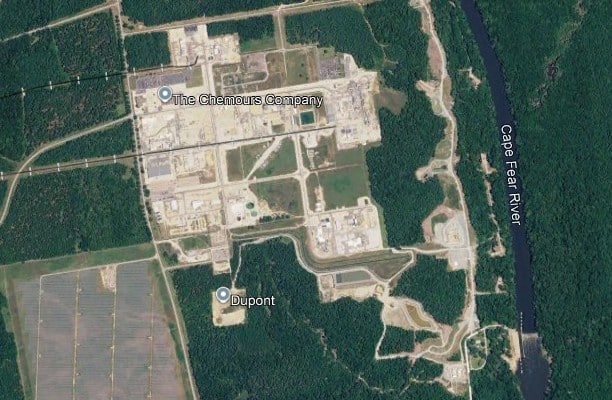
On September 10, 2026, North Carolina Attorney General Jeff Jackson and North Carolina Department of Environmental Quality (NCDEQ) Secretary Reid Wilson announced that a $590 million dollar deal had been reached between the state of North Carolina and eleven of its local governments and DuPont and Chemours over PFAS contamination in the state. This is the largest total environmental damages monetary recovery in North Carolina’s history, with a portion of the funds being used to create a $135 million reserve fund from DuPont and their sister company Corteva. The money in that fund is meant to ensure that Chemours continues working to comply with a 2019 consent order to stop discharging contaminants into the Cape Fear River and air from its Fayetteville Works facility. Earlier in 2026, the EPA and Chemours reached a deal totally only $90 million dollars for environmental projects across three different states, with no guarantee that North Carolina would see any of those funds. That deal was reached without consulting the North Carolina Attorney General’s Office or the North Carolina Department of Environmental Quality, and Attorney General Jackson, Secretary Reid, and North Carolina Governor Josh Stein filed comments in court opposing that deal.
DuPont began operations at the Fayetteville Works chemical plant in the 1970s, and it was around 1980 that they started dumping PFAS into southeastern North Carolina. PFAS were regularly released into the air, soil, and into the Cape Fear River, which provides drinking water for 500,000 residents in the southeastern portion of our state. In addition, water from the Cape Fear is used to irrigate crops and water livestock; thus, forever chemicals, as they are commonly known, were present in the water and food for thousands of North Carolinians over several decades. In late 2016, a group of North Carolina researchers published a study that showed there were exceptionally high levels of PFAS in the Cape Fear River. Shortly after those results were published, NCDEQ filed an emergency injunction in early 2017 to stop Chemours, the current chemical company operating the Fayetteville Works plant, from dumping any more PFAS from the plant. Two years later, in 2019, Chemours was forced, via a landmark consent order, to cease releasing their wastewater into the Cape Fear; control their emissions of PFAS, particularly GenX, in the air; and begin providing water filtration devices to North Carolina residents with contaminated drinking water. In addition, Chemours had to actively work to reduce current PFAS levels within the Cape Fear River, address all sources of chemical contamination at the Fayetteville Works facility, and pay a $12 million civil penalty.
The September 2026 settlement with DuPont/Chemours guarantees that $455 million will go to the state and the 11 local governments that joined the deal. Of that, the majority of the funds, $380 million, will be divided amongst the 11 local governments; the remaining $75 million will be allocated to the state. All the money will be paid out over a period of 10 to 15 years, with $55 million of the state’s portion going into the Emergent Contaminant Mitigation Fund. If, at any point in time, Chemours becomes unable to pay for their continued obligations under the 2019 consent order and the 2026 settlement, North Carolina can dip into the $135 million reserve fund. That way affected North Carolinians will continue to be able to receive the help they need in recovering from the decades of contamination. Thus far, Chemours is holding up its end of the bargain: they have provided clean water to approximately 10,500 families whose wells were contaminated; stopped discharging contaminated wastewater into the Cape Fear River; and have constructed and installed various means of preventing further contamination of water, soil, and air in the region. While this settlement is reason to celebrate, there are still several more ongoing cases in North Carolina that have yet to reach a conclusion. Nevertheless, this historic settlement is a major step forward in holding polluters accountable for the damage they have done to our state.
#PFAS #WaterQuality #NorthCarolina #EnvironmentalRegulations #CapeFearRiver #EnvironmentalJustice #NCDEQ #NCDOJ