
Why Non-Jurisdictional Wetlands Can Still Trigger USDA Penalties
Disclaimer: This document is for informational purposes only and does not constitute legal advice. Producers and consultants should seek guidance from qualified legal counsel regarding specific compliance obligations under the Food Security Act, the Clean Water Act, or related federal programs.
I. Introduction
The Environmental Protection Agency and the Department of the Army released the 2025 Proposed Definition of Waters of the United States. This action has generated significant confusion among agricultural producers about which wetlands fall under EPA authority and which remain subject to the Food Security Act administered by the United States Department of Agriculture.
A common misconception is that a wetland must be regulated under the Clean Water Act in order for a producer to face federal penalties for filling it. This is incorrect. The Food Security Act often applies to wetlands even when those same wetlands are not considered Waters of the United States. The purpose of this brief is to explain the legal frameworks and clarify when and why USDA penalties apply.
II. Statutory Framework
A. Clean Water Act Jurisdiction
The Clean Water Act governs the discharge of dredged or fill material into navigable waters as defined at 33 U.S.C. 1362(7). The 2025 Proposed WOTUS rule emphasizes two key factors: relatively permanent flow and a continuous surface connection. Wetlands that do not meet these criteria are not jurisdictional under the Clean Water Act and do not require permits under Section 404.
B. Food Security Act Wetland Compliance
The Food Security Act of 1985 creates wetland conservation requirements known as the Swampbuster provisions. These are codified at 16 U.S.C. 3801 through 16 U.S.C. 3862. The statutory provisions relevant to wetland identification and conversion include:
- 16 U.S.C. 3801(a)(27) which defines wetlands for USDA purposes.
- 16 U.S.C. 3821 which makes producers ineligible for USDA benefits following a wetland conversion.
- 16 U.S.C. 3822 which outlines certification processes including restoration, minimal effect, and mitigation criteria.
These statutory requirements are implemented through USDA regulations at 7 C.F.R. Part 12. NRCS defines wetlands based on hydric soils, hydrophytic vegetation, and wetland hydrology. There is no requirement for hydrologic connection to navigable waters. This means USDA wetland determinations operate independently from the WOTUS definition.
III. Independence of USDA Wetland Determinations
The 2025 WOTUS rule explicitly reaffirms that USDA makes its own determinations for the Food Security Act. EPA and the Corps acknowledge that the USDA retains full authority over prior converted cropland determinations and wetland certification for agricultural programs.
The agencies state that the USDA is responsible for making determinations as to whether land is prior converted cropland for its Food Security Act purposes.¹
They also state that USDA determinations of prior converted cropland will continue to be recognized for Clean Water Act purposes.²
This confirms that USDA wetlands are governed by the Food Security Act, not the Clean Water Act, and that the WOTUS rule has no bearing on Swampbuster applicability.
IV. USDA Penalties Apply Regardless of WOTUS Status
Under 16 U.S.C. 3821(a), a producer who converts a USDA-designated wetland becomes ineligible for a wide range of USDA program benefits until the wetland is restored or mitigation is approved. This penalty applies even if the wetland is not jurisdictional under the Clean Water Act.
Example
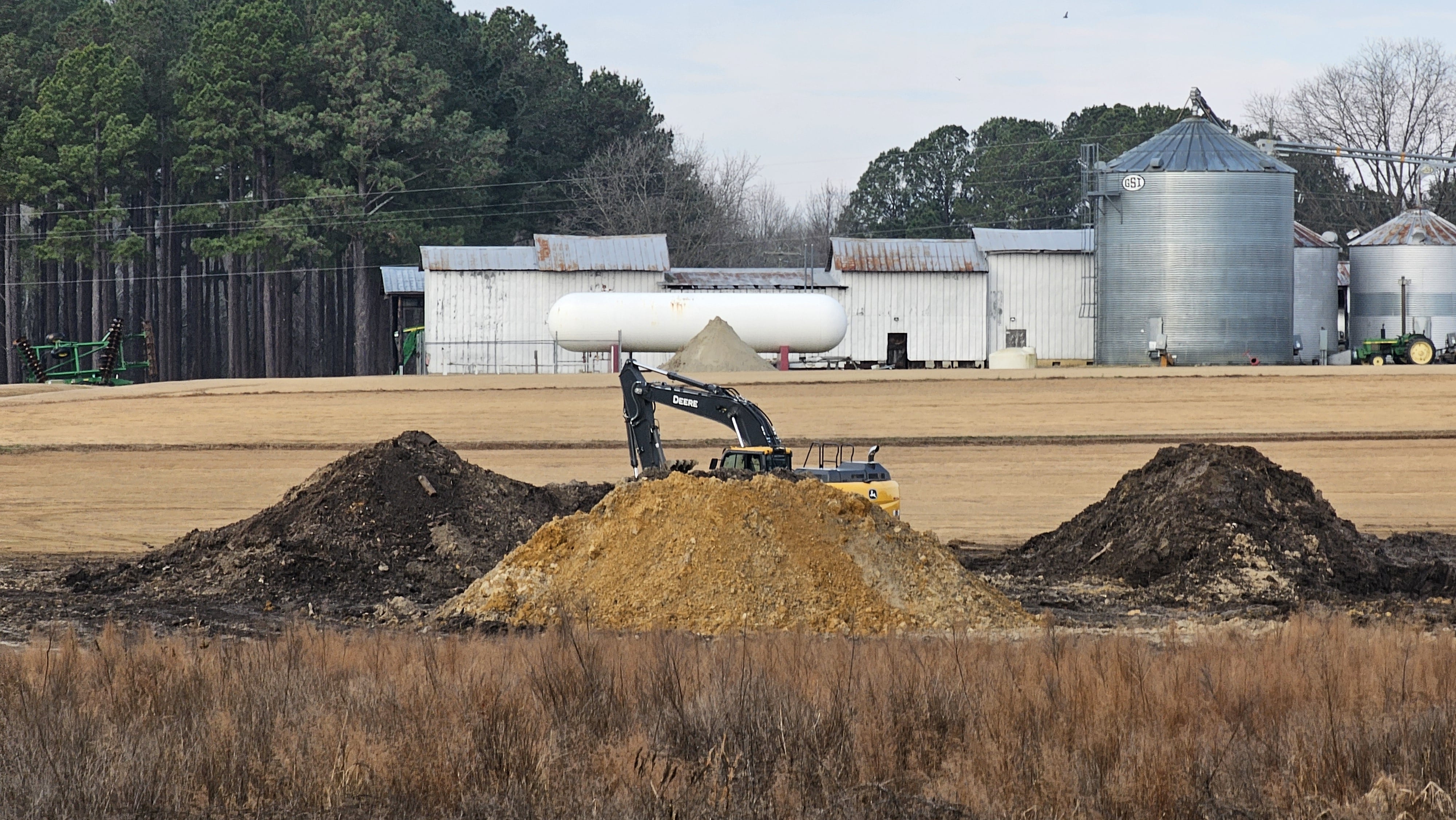
A producer fills a depressional wetland that has no continuous surface connection. The wetland is not WOTUS under the 2025 rule so no Section 404 permit is required. However, NRCS identifies the area as containing hydric soils, hydrophytic vegetation, and wetland hydrology. It is therefore a Swampbuster wetland. The producer becomes ineligible for FSA subsidies, crop insurance premium assistance, and other USDA benefits until compliance is restored.
This scenario illustrates the independence of the two systems. EPA and USACE may lack jurisdiction, yet USDA penalties still apply.
V. Prior Converted Cropland Under Both Statutory Schemes
Prior Converted Cropland is defined at 7 C.F.R. 12.2(a)(8) and 16 U.S.C. 3801(a)(8). The 2025 WOTUS rule continues to exclude PCC from jurisdiction unless abandoned. Abandonment occurs when the land has not been used for agricultural purposes for more than five years and wetland characteristics return.³
Importantly, abandonment for Clean Water Act purposes may not result in abandonment under USDA rules, and vice versa. USDA PCC determinations are made independently using the Food Security Act and the National Food Security Act Manual.
VI. USDA Conservation Programs Use USDA Definitions
USDA conservation programs, including the Wetland Reserve Program and Wetland Reserve Easements, rely exclusively on NRCS wetland determinations, not EPA jurisdiction. If a producer alters or damages a wetland protected under a USDA conservation contract, penalties, repayment obligations, and restoration requirements may be imposed regardless of Clean Water Act jurisdiction.
VII. Conclusion
A wetland does not need to be a Water of the United States for the Food Security Act to apply. Clean Water Act jurisdiction is not required for USDA to impose penalties for wetland conversion. The two statutes provide distinct definitions, regulatory standards, and enforcement authorities. Compliance with one statute does not guarantee compliance with the other, and producers must consider both before altering land that could contain wetland characteristics.
Agricultural producers and consultants should seek qualified legal counsel before conducting activities that may affect wetland areas or prior converted cropland, particularly under changing federal regulatory frameworks.
Endnotes
1. Environmental Protection Agency and Department of the Army, Updated Definition of Waters of the United States (Proposed Rule), prepublication version signed Nov. 17, 2025, p. 149.
2. Ibid., p. 150.
3. Ibid., pp. 143 to 144.
4. Food Security Act of 1985, Pub. L. 99 198, codified at 16 U.S.C. 3801 et seq.
5. 16 U.S.C. 3821. Ineligibility for program benefits for certain conversions of wetlands.
6. 16 U.S.C. 3822. Certification of wetlands including restoration, mitigation, and minimal effect provisions.
7. 7 C.F.R. Part 12. Highly Erodible Land and Wetland Conservation.
8. 7 C.F.R. 12.2(a)(27). Definition of wetland for USDA purposes.
9. 7 C.F.R. 12.2(a)(8). Definition of prior converted cropland.
10. USDA Natural Resources Conservation Service. National Food Security Act Manual, Parts 513 to 527.
Very helpful article. Thank you!