
The following blog is a summary of the article “To Save the Tiniest Turtle in North America, Scientists Are Rebuilding Bogs From Scratch” by Carrie Arnold published in Sierra magazine on March 26, 2025. To read the original article, click here.
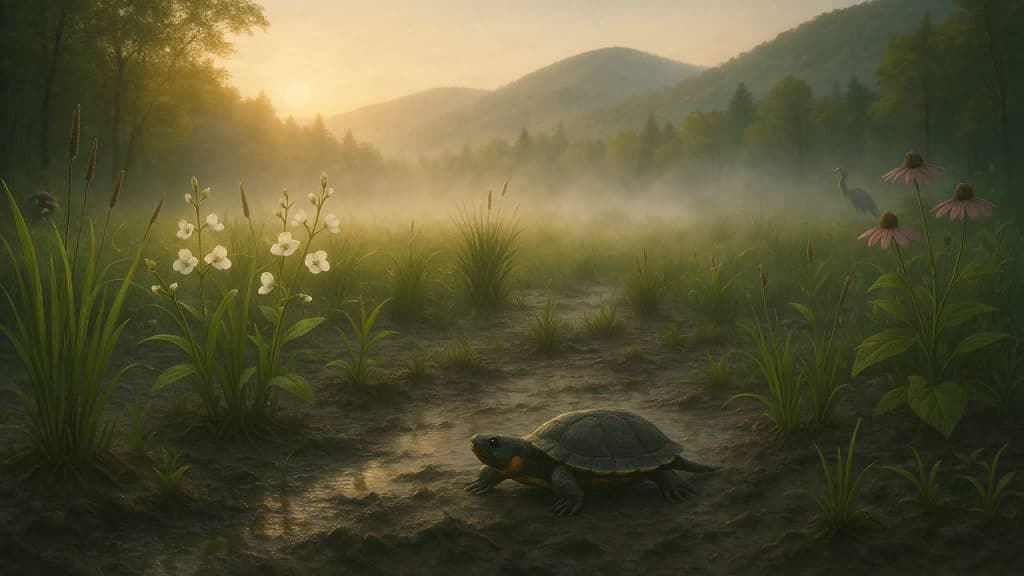
The elusive bog turtle, Glyptemys muhlenbergii, resides in the rare and fragile mountain bogs of the Appalachian region, particularly in western North Carolina. These turtles are no bigger than a softball and are remarkably adept at evading detection, thanks to their powerful limbs and camouflaged environment. Brian Parr from the Nature Conservancy stresses the need for patience and endurance when searching for them, as even experts struggle to spot the reptiles. The bogs themselves are harsh, overgrown wetlands that demand physical perseverance from anyone attempting to navigate them. Despite their vibrant orange neck markings, bog turtles are remarkably difficult to find due to their reclusive habits and the rugged landscape they inhabit.
Historically, wetlands like bogs and fens have been misunderstood and drained for agricultural use, leading to a significant reduction in suitable habitat. Once covering 5,000 acres in North Carolina, these environments have dwindled to just 500 acres, placing the turtles and other species like the mountain sweet pitcher plant at risk. Though northern bog turtles are federally protected, their southern counterparts lack such safeguards, exposing them to poaching and habitat destruction. Conservationists like Parr have taken on the task of creating fens to support turtle populations, but building and maintaining these habitats is difficult, especially with the absence of the natural ecological processes that originally formed them. These efforts represent a broader shift in conservation from single-species focus to full ecosystem restoration.
Efforts by scientists such as Mike Knoerr have revealed that even restored bogs face threats from modern pressures, including over-predation of turtle eggs by raccoons and skunks. While habitat destruction has been a major contributor to the turtle’s decline, other factors like predator overpopulation and invasive species have complicated recovery. Knoerr’s years-long observation and habitat restoration led to the return of some turtles, but most were elderly and not reproducing. The occasional hatchling that does survive, often protected with microchips and monitored by biologists, brings a glimmer of hope. Yet, the slow and uncertain pace of restoration, combined with regulatory rollbacks and extreme weather events, makes long-term success tenuous.
The fight to save bog turtles has mobilized an alliance of conservationists, landowners, and volunteers. People like Ron Linville have donated land and labor to protect these wetlands, helping form networks like the Mountain Bogs National Wildlife Refuge. Such partnerships offer a unique model for preserving endangered habitats through private-public collaboration. However, climate change and natural disasters such as Hurricane Helene have compounded the challenges, burying many restored bogs under mud and debris and delaying critical biological assessments. Conservationists like Nolan and Harlan argue that wetlands could help mitigate flooding and climate impacts if prioritized over traditional development. Ultimately, the story of the bog turtle reflects a larger lesson: that human survival is intertwined with the health of natural ecosystems, and ignoring their importance has lasting consequences.