
The following blog post is a summary of the article “Can Restoring City Streams Bring Back Missing Birdlife?” by Kaleb Friend published by the National Wildlife Federation on June 25, 2025. To read the original article, click here.
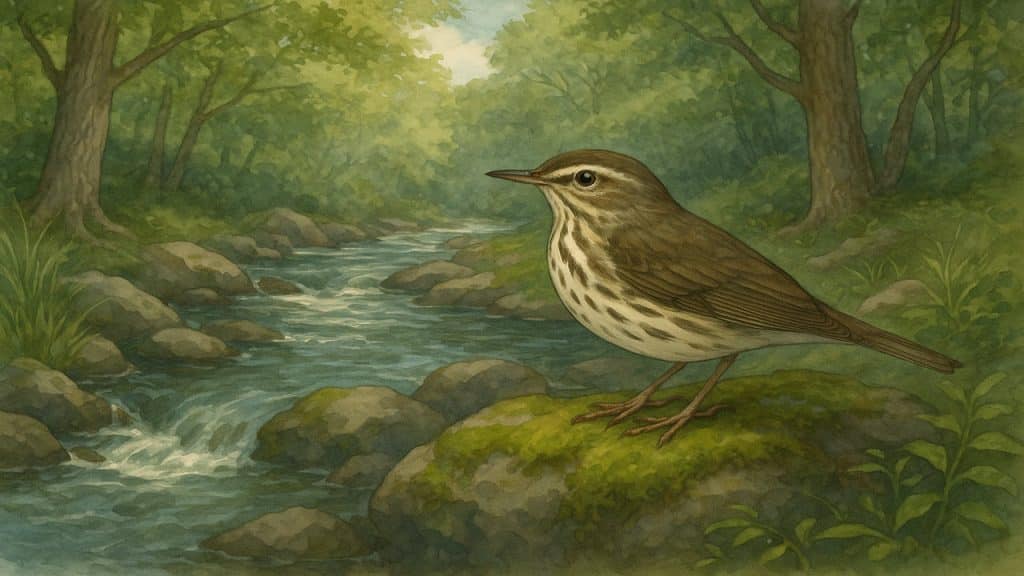
Rachel Carson’s 1954 encounter with the Louisiana waterthrush in Rock Creek Park serves as a historical reference point for the bird’s decline in Washington, D.C. Over the next two decades, the species became far less common, particularly in areas where it once bred reliably. Research points to the degradation of Rock Creek’s waterways as a key reason for this loss. The waterthrush depends on clean streams with abundant insect life and secure nesting sites along banks, all of which diminished as pollution increased. By the late 20th century, the health of Rock Creek had become emblematic of a broader problem facing urban waterways nationwide.
The causes of this decline were multifaceted but heavily tied to urbanization. Uncontrolled stormwater runoff scoured streambeds, transforming gentle pools into eroded, polluted torrents. Loss of vegetation and increasing impervious surfaces, such as roads and buildings, worsened the problem, while sewage overflows compounded contamination. This phenomenon, known as “urban stream syndrome,” affects more than 80,000 miles of rivers and streams in the United States. The consequences extend beyond wildlife, threatening water quality, carbon sequestration, and recreational resources. Streams like Rock Creek ultimately feed into larger networks, such as the Chesapeake Bay, linking urban pollution to regional environmental health.
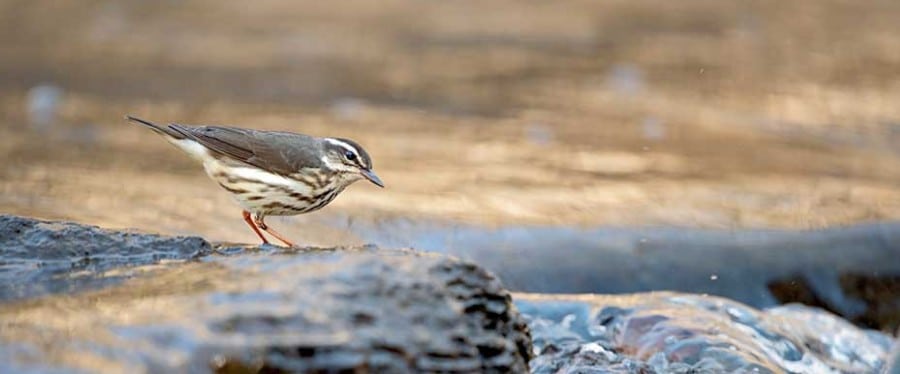
Louisiana waterthrush, Parkesia motacilla, in Washington, D.C.’s Rock Creek Park. Photo courtesy of Kaleb Friend and NWF.
Efforts to restore Rock Creek highlight the potential for ecological recovery. Beginning in 2005, the Clean Rivers Project and initiatives from the city’s Department of Energy and Environment, the National Park Service, and nonprofits introduced measures such as green infrastructure, stormwater regulations, and sewage containment. While scientists often assess restoration by monitoring water chemistry and sediment levels, many argue true success is reflected in “ecological uplift”—the return of diverse native species. Signs of such uplift appeared in 2013, when birders observed Louisiana waterthrushes breeding in restored areas of Rock Creek for the first time in decades. These sightings suggest that targeted restoration efforts can improve habitat quality and bring back species once thought to be lost.
#UrbanNature #Waterthrush #SaveOurStreams #CleanWater #NatureRestoration #NationalWildlifeFederation #TheSwampSchool