
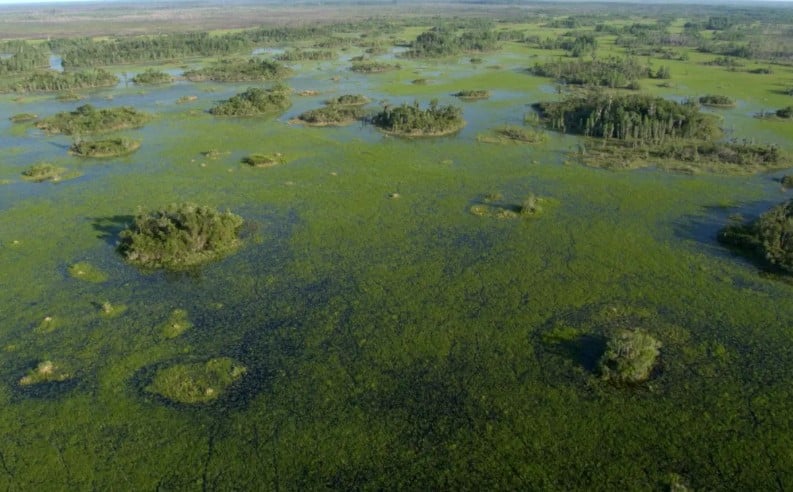
On July 25, 2026, UNESCO formally added Okefenokee National Wildlife Refuge to its World Heritage List. This marks the first site managed by the U.S. Fish and Wildlife Service to be placed on this prestigious list, and reflects how important the Okefenokee Swamp and surrounding forests and pine savannas are. In their official remarks on why this refuge was awarded this distinction, the World Heritage Committee repeatedly emphasized the critical habitat areas of Longleaf Pine Savanna, and the fact that the refuge is a global biodiversity hotspot. In addition, the land is of great importance to indigenous groups, particularly members of the Muscogee (Creek) Nation, and Okefenokee Swamp was designated as a Wetland of International Importance under the Ramsar Convention in 1971. Having one of its wildlife refuges added to the World Heritage Site list is a huge honor for the United States and the generations of people who have helped preserve and care for the habitats within.
The history of the Okefenokee National Wildlife Refuge (ONWR) began in 1937, when an Executive Order signed by President Franklin D. Roosevelt established it as such. In 1974, 87% of it was designated a National Wilderness Area under the Eastern Wilderness Areas Act, which amended the original Wilderness Act of 1964 to include wilderness areas that had been influenced by man, and not just pristine, old-growth forests that had never been logged or managed in any way. Managed by the U.S. Fish and Wildlife Service, ONWR is currently protected via several pieces of legislation, among them the National Environmental Policy Act, the Archaeological Resources Protection Act, and the Endangered Species Act. Spanning over 400,000 acres, the refuge is of a large enough size that its key ecological processes, such as fire and hydrology changes, are able to function as normal, naturally managing the landscape as has been done for thousands of years. Approximately 27,676 acres of the property are home to the longleaf pine savanna habitat, which historically covered around 90 million acres of the southeastern United States, but now only about 3% of this habitat remains in existence. Longleaf pine savannas are unique ecosystems in and of themselves, hosting a diverse concentration of plant and animal species, including the red-cockaded woodpecker, gopher frog, and hairy rattleweed.
One of the more fascinating, but less well-known aspects of the Okefenokee National Wildlife Refuge, is that it is likely the world’s largest freshwater, subtropical peat bed. Peat is a natural carbon sink, thus peat beds around the world play an important role in storing carbon. When peat beds are destroyed, the carbon is released, which contributes to rising global temperatures. In turn, that increase in temperature results in climate changes across the globe, which often result in more severe weather events such as hurricanes and drought. As the Okefenokee peat bed is still intact, it is playing a huge role in carbon storage, water storage, and water filtration for the whole region. Its subtropical nature also makes it unique, as most peat habitats are found in cooler climates at higher latitudes.
In 2025, it was announced that The Conservation Fund had purchased a proposed mining site adjacent to the Okefenokee National Wildlife Refuge. This marked the end to a years-long battle to protect the Okefenokee, as it was unclear exactly what impact withdrawing 1.44 million gallons of water per day from the underlying aquifer for mining operations would have on the swamp. One can assume, though, that reducing the amount of water available to the swamp ecosystem would have left portions of the refuge drier than normal. In turn, the usual wildfires that occur on site would burn hotter and potentially spread over a large portion of the landscape. However, now that the mining threat has passed, and the UNESCO World Heritage List has recognized the Okefenokee National Wildlife Refuge, the hope is that more resources will be dedicated to managing and preserving this spectacular natural resource for future generations to enjoy. In their announcement of its addition to their list, the World Heritage Committee expressed the hope that a formal buffer zone along the entire perimeter would be established and enforced, and that the historical, cultural, and spiritual needs of the Muscogee (Creek) Nation would be addressed in any updated conservation plans for the property. So, the next time you find yourself in southeastern Georgia or northeastern Florida, consider taking a day trip to the Okefenokee. I guarantee you’ll understand why its natural and cultural significance are now recognized worldwide.
#OkefenokeeSwamp #OkefenokeeNationalWildlifeRefuge #WorldHeritageSite #RamsarWetlandofInternationalImportance #LongleafPineSavanna #Conservation #WetlandWednesday #TheSwampSchool