
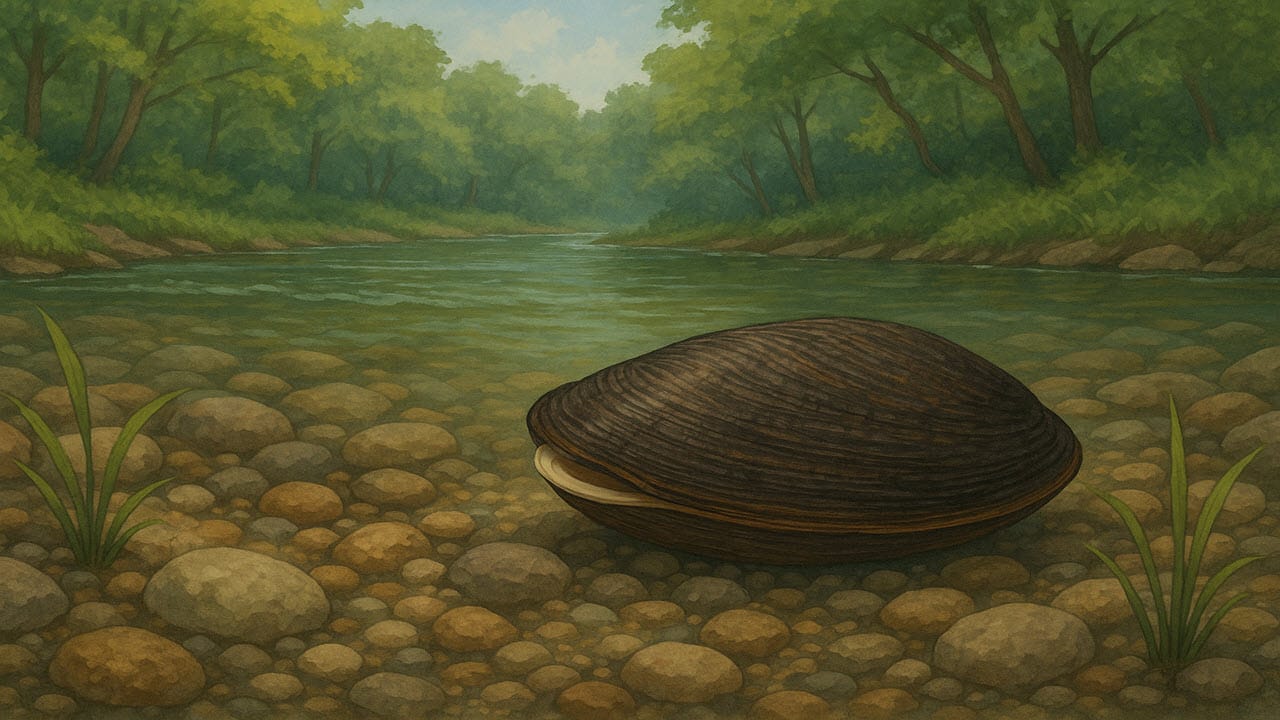
It’s official: North Carolina has a new species of freshwater mussel, Ligodonta obscura, the solstice creekmussel! The journey from discovery in the wild to officially describing it as a new species has been a long one, almost a decade in the making. It all started in 2016, when biologists with the North Carolina Wildlife Resources Commission (NCWRC) were performing a routine mussel survey on the Little River. One of the specimens they collected didn’t quite match up with the physical characteristics of another similar species, so they collected a tissue sample for further testing and a live specimen. Subsequent surveys were conducted through 2022, with more tissue samples taken for genetic testing, and live individuals transported to the NCWRC Marion Conservation Aquaculture Center (MCAC) so life history studies could be conducted. The genetic testing results revealed that the individuals determined to be solstice creekmussels were genetically distinct from other mussel species, adding a whole new branch to freshwater mussel family tree!
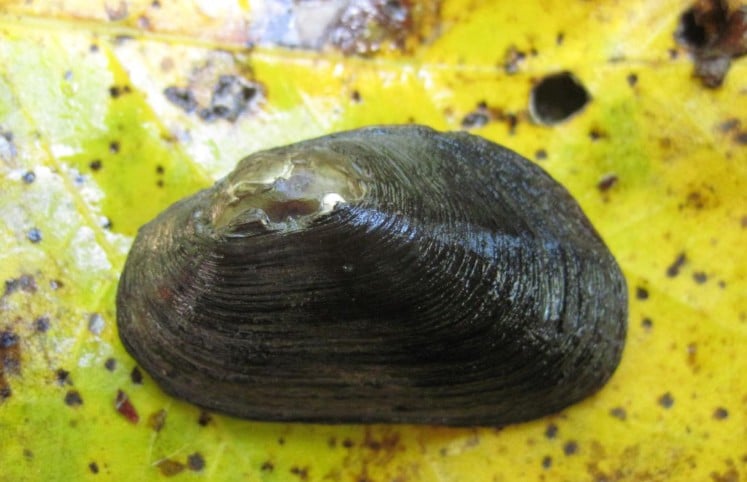
Ligodonta obscura, the solstice creekmussel. Photograph courtesy of Brena Jones and the NC Wildlife Resources Commission.
When the biologists found the first specimen back in 2016, the trait that first gave them pause was the mussel’s teeth. Now, as some of you may already know, mussels are filter feeders: they siphon water into their bodies, filter out food particles, and release the filtered water back out. So why do mussels have teeth? Well, in bivalves, which are organisms with a compressed body enclosed within a hinged shell, their “teeth” are actually interlocking structures that hold the two halves firmly together. The morphology, aka shape and structure, of the teeth on the collected specimen looked different than the known teeth morphology of another freshwater mussel species. Curious, the biologists began performing more mussel sampling surveys in Little River and nearby streams; continued conducting genetic tests on collected tissue samples; and kept studying the physical traits of the preserved and live specimens that they had come across on during their surveys. Three historic specimens found housed within the North Carolina Museum of Natural Sciences research collections had been collected from a different stream a few years prior and were subsequently recognized as members of the new species during the recent research effort.
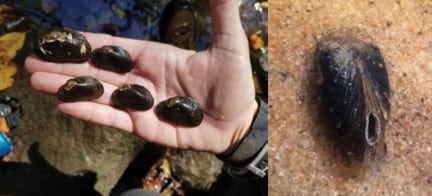
Left, five solstice creekmussels collected during a mussel survey; right, a live solstice creekmussel housed at the NCWRC MCAC. Photographs courtesy of Michael A. Perkins, the NC Wildlife Resources Commission, and the NCWRC MCAC.
Ultimately, it was the genetic testing that revealed the solstice creekmussel was on its own branch of the phylogenetic tree. Not only was this a new species, but this mussel also represented a whole new genus! The scientists decided to call the genus Ligodonta, meaning “little tooth”, and the species obscura, referring to the fact that this species was only recently discovered. It’s proposed common name, solstice creekmussel, refers both to its preferred creek bed habitat and to its reproductive biology. Remember those live specimens that were transported to the MCAC for further study? Well, those studies revealed that the mussels spawned during the winter solstice.
Unfortunately, more recent mussel surveys have revealed that the historic range of this species, already pretty small, has gotten even smaller. Today, the solstice creekmussel is only found in a four-mile stretch of stream within the Yadkin-Pee Dee River system. For those of you who are not particularly bothered by the plight of a tiny bivalve in a stream in the middle of North Carolina, you might want to start paying attention. Mussels are important for two big reasons: they clean water by filtering out sediment and excess nutrients and they provide a very important water quality indicator for people. If mussels are living in a stream, that means that water supply is healthy, and safe for people, animals, and crops. However, if the mussels are struggling, that means the water is too polluted, with sediment, excess nutrients, and harmful toxins, for them to thrive. Consequently, whatever is in the water making it too polluted for them is also in the water people and animals drink and the water used for agriculture. So, for those of you out there you who enjoy clean water to drink and crops watered with clean, non-toxic water, show your gratitude to the freshwater mussels by helping protect your local watershed. Clean water benefits everyone.
#FreshwaterMussels #SolisticeCreekmussel #CleanWaterForAll #NCWildlife #WetlandWednesday #TheSwampSchool