
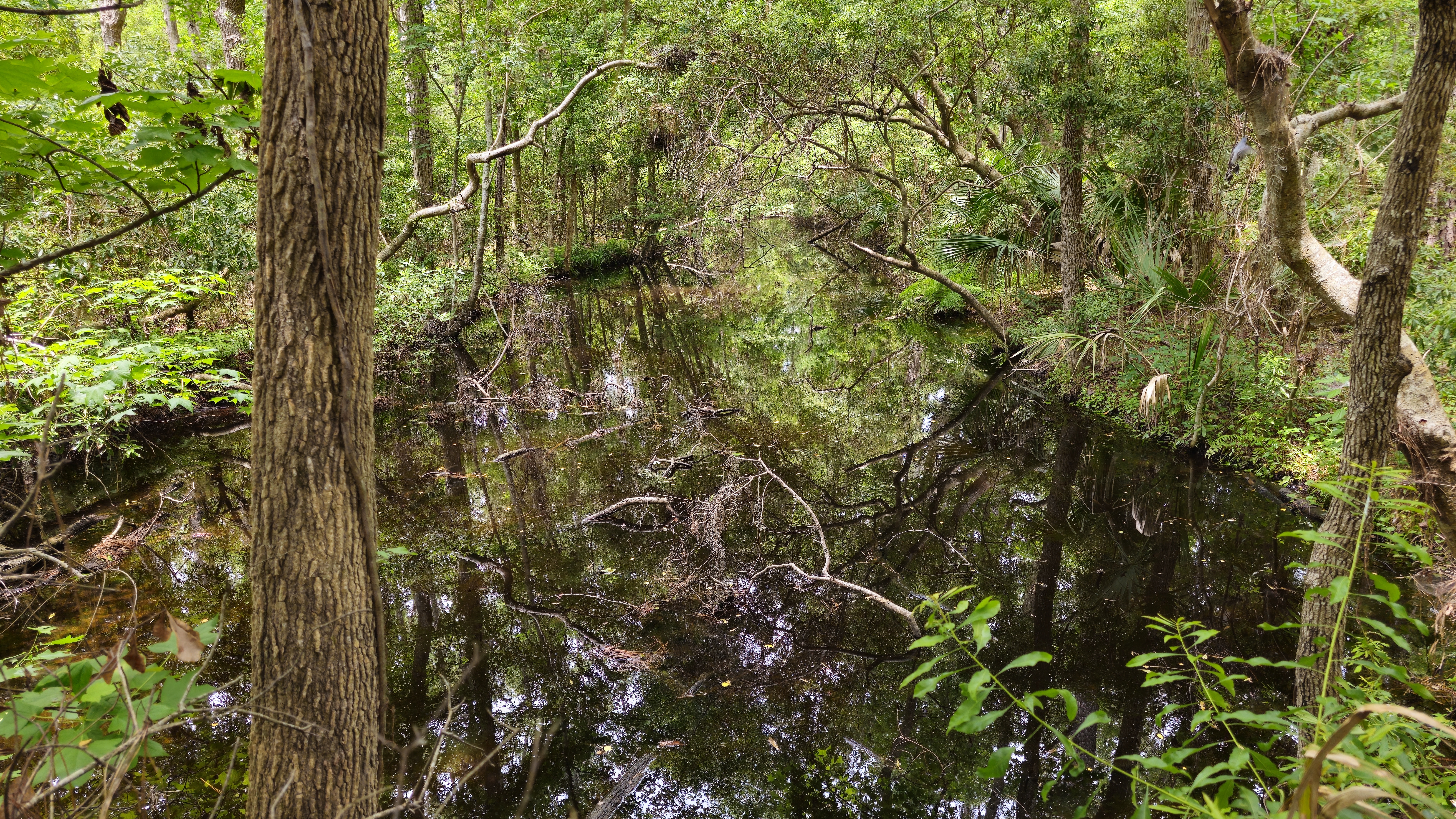
It is a truth universally acknowledged that spending time in natural spaces makes people feel better. This phenomenon has been studied in the scientific community since the 1980s, but many cultures around the world have recognized the importance of spending time in nature for centuries. Forest bathing, a form of purposeful relaxation that involves immersing oneself in nature, is a tradition with a rich history in Japan and South Korea. In North American, Indigenous Peoples across many tribes believed that one had to balance their life with their place in nature in order to be wholly healthy in mind, body, and spirit. For decades, researchers have found that people who spend more time in nature are less stressed, are more relaxed and calm, and suffer from less depression and anxiety than people who spend little to no time in nature. The question scientists are looking to answer now is, why?
Researchers have been tackling this question from numerous angles and viewpoints, as was explained in a National Wildlife Federation article by Katarina Zimmer published on June 24, 2026. One theory is the stress reduction theory, proposed in 1991 by health scientist Roger Ulrich and his colleagues. Their theory is that, while there may indeed be an inborn tendency for humans to seek out and respond positively to and within natural settings, each person’s response to nature is built around their cultural and individual experiences in nature. Individuals who rely on natural ecosystems for their source of income or sustenance may have more complicated feelings about that natural space, but might feel less anxious in a different natural setting. People who feel safe and secure in neighborhoods with well-manicured lawns might feel stressed in wild areas, or even in neighborhoods with wooded lots or native plant gardens that are more untamed in appearance.
Another theory is the attention restoration theory, which was first posited in the 1980s by psychologists Rachel and Stephen Kaplan. They hypothesize that our brains spend much of their time on concentrating, planning, and executing tasks, which build up over time, and lead to feelings of anxiety, depression, and stress. Spending time in nature lets our brains calm down by gently captivating us in ways that do not require a lot of brain activity. Listening to rushing water or watching a snail slowly patrol along a fern frond do not require our brains to do very much at all; instead, people are able to be mentally engaged enough to be captivated by what they see, but not so much that their brains become overloaded.
Throughout all the different hypotheses and theories that have been tossed out over the years, the one constant has been that nature has been shown to provide more and more benefits, from pain management, to increasing creativity, to even increasing individuals’ satisfaction with their own social life, even if they interact with natural spaces by themselves. This is why medical professionals are starting to prescribe spending time in nature to their patients. Several U.S. states have park prescription programs, where partnerships between medical facilities and local parks create opportunities for patients and their families to more easily take advantage of and spend more time in nature. While further study is needed to fully pinpoint why, exactly, nature has a positive effect on people, it seems that humans need natural spaces for our health and wellbeing as much as nature needs humans for its wellbeing.
#NatureAndWellness #MentalHealth #GetOutside #NationalParkRX #EnvironmentalEducation #WetlandWednesday #TheSwampSchool