
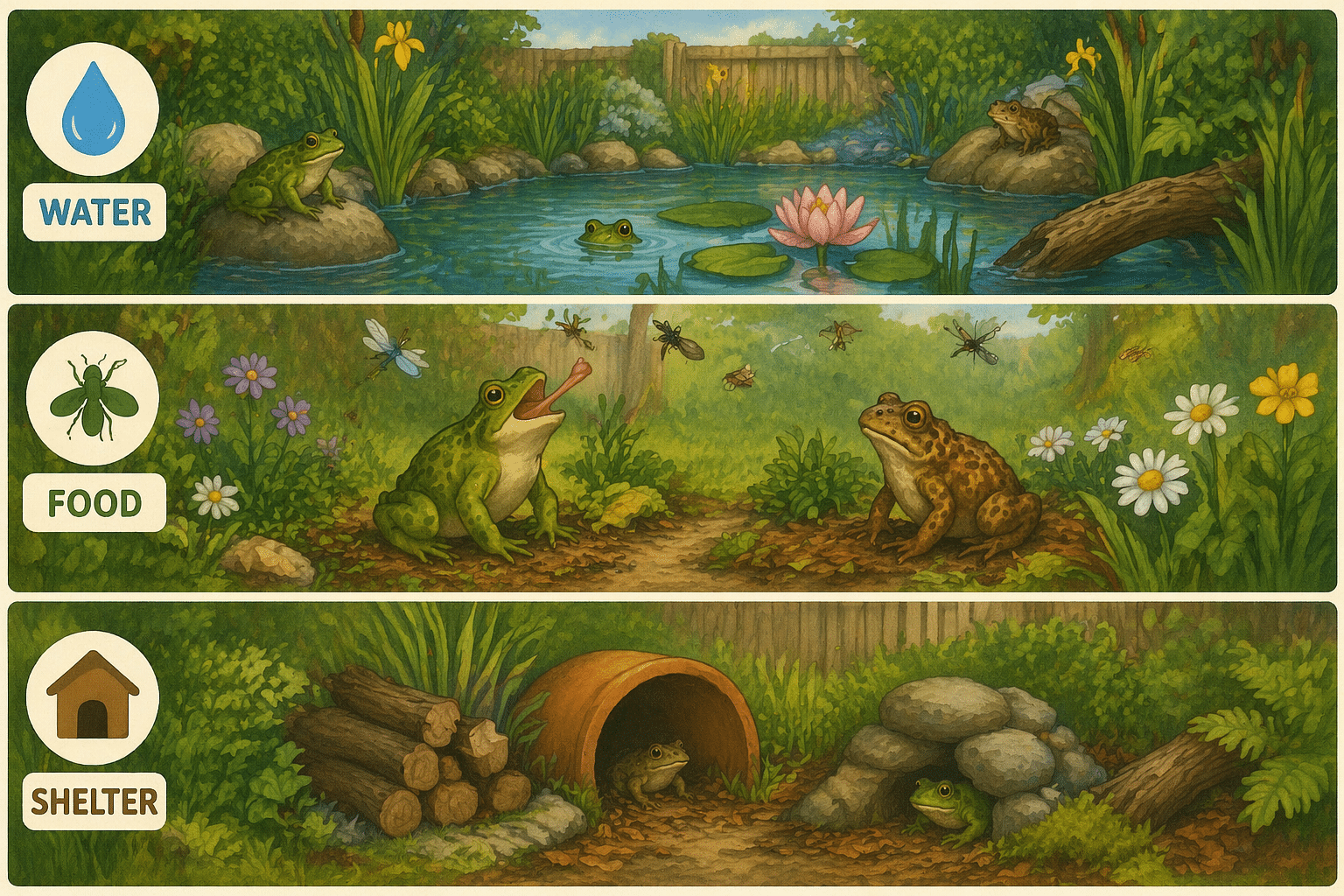
Spring has sprung, which means the frogs and toads are springing, too, and tadpoles will soon be here. Toads and frogs are great assets to have in your home’s green spaces, because a single frog or toad can consume hundreds of troublesome garden pests in a single day, such as slugs, mosquitoes, and weevils. In addition, there’s nothing like spending time outside when they strike up the band and begin to call. So, if you’re thinking you might want to start attracting more amphibian friends to your yard, keep reading.
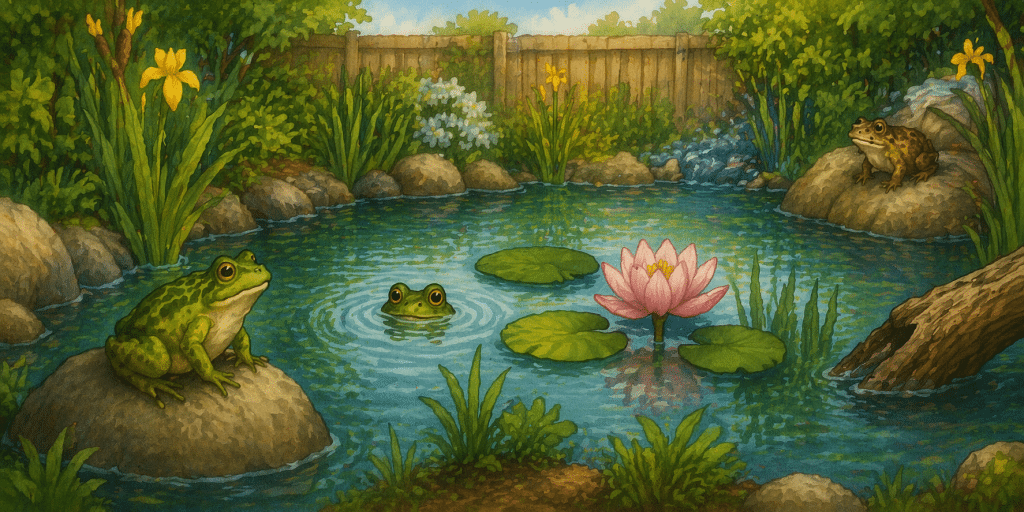
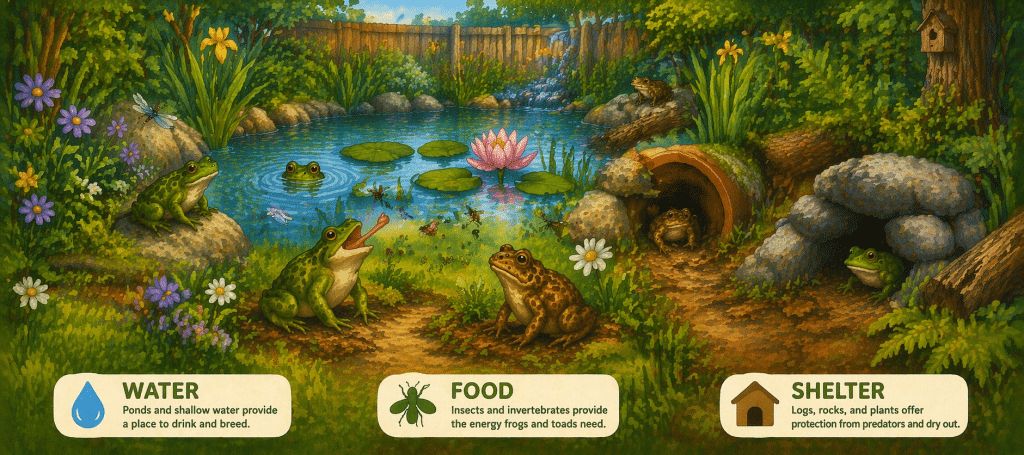
First things first: water. Since amphibians need water as part of their life cycle, you will need to provide some low-to-the-ground water sources for them. This can be as simple as burying a large plant saucer into the ground, or as elaborate as constructing a mini pond or wetland ecosystem in a portion of your yard. Whichever way you choose, make sure you have provided ways for frogs and toads to easily get into and out of the water. While frogs are better swimmers, toads are not, and all will benefit from being able to safely enter and exit their new watering hole. Be sure to use rainwater, not tap water, as amphibians are incredibly sensitive to chemicals that may be present in the water flowing from your faucets. Some people create elaborate rainwater collection systems in their yards and gardens, where overflow from rain barrels and gutters gathers in small ponds and wetlands that provide suitable habitat for amphibians.
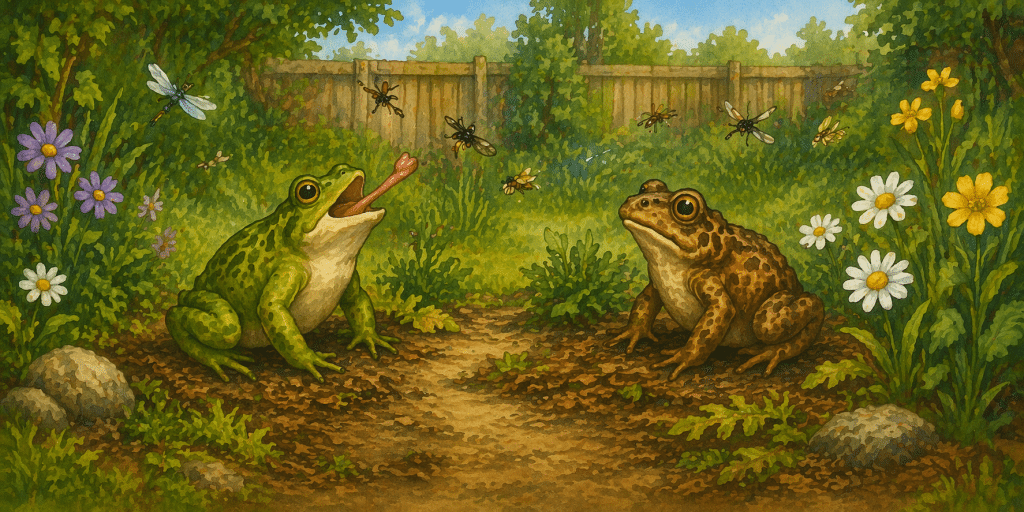
Once their water source has been taken care of, the next step is making sure your yard has plenty of food for them to eat. Now wait a minute, you may be thinking, wasn’t the whole point of having frogs and toads in my yard preventing pests? Well, once the toads and frogs have polished off the pesky mosquitoes and slimy slugs, they will need something else to fill their bellies. If there’s no other food available, they won’t stick around, and your pest problems will come back. So, do some research and find the closest native plant nursery in your area. Plan a visit and be sure to talk to the staff for guidance on what plants would do best in your particular region. Native plants support far more species of insects than non-native ornamentals, thus resulting in more food for amphibians to eat. As a bonus, if you get a variety of plants that will bloom at different times during the growing season, you will provide a continuous food source for pollinators, like butterflies and bees, and will attract more songbirds to your yard, too.
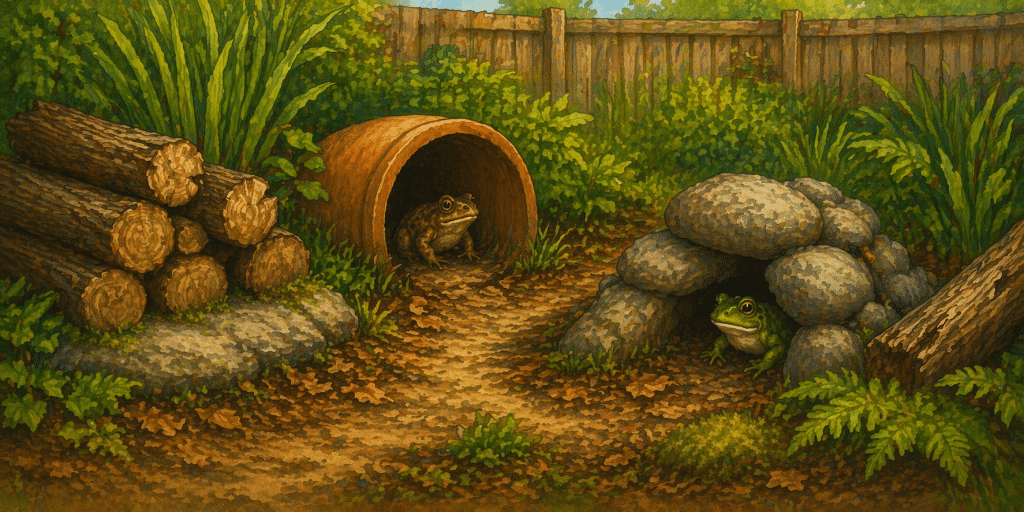
Finally, frogs and toads need shelter, someplace to hide during the heat of the day. Constructing toad houses out of broken terracotta pots is a popular DIY craft, but log piles and brush piles are great places for amphibians to hide, too. In addition, letting some of those native plants grow big and bushy will provide ample cover; if you created a miniature wetland system, try adding some wetland plants around the edges to provide your new frog and toad friends with some privacy. Mixing things up by planting shrubs alongside herbaceous plants provides some height, which some frog species will take advantage of during the breeding season.
Once you have assembled all the pieces of your amphibian habitat, water, food, and shelter, consider applying for a Certified Wildlife Habitat certification from the National Wildlife Federation. The NWF website is full of information on how to make your yard or garden more wildlife friendly, in addition to guidance on how to create habitats at workplaces, schools, and places of worship. As April is Frog Month and Native Plant Month, now is the perfect time to begin the rewarding process of transforming your backyard into an amphibian oasis.
#FrogMonth #NativePlantMonth #Amphibians #SavetheFrogsandToads #CertifiedWildlifeHabitat #NationalWildlifeFederation #BackyardHabitat