
The following blog post is a summary of the article “Why this tribe is buying up hundreds of acres of farmland–and flooding it” by John Ryan, published by NPR on May 3, 2026. To read the original article or listen to the story, click here.
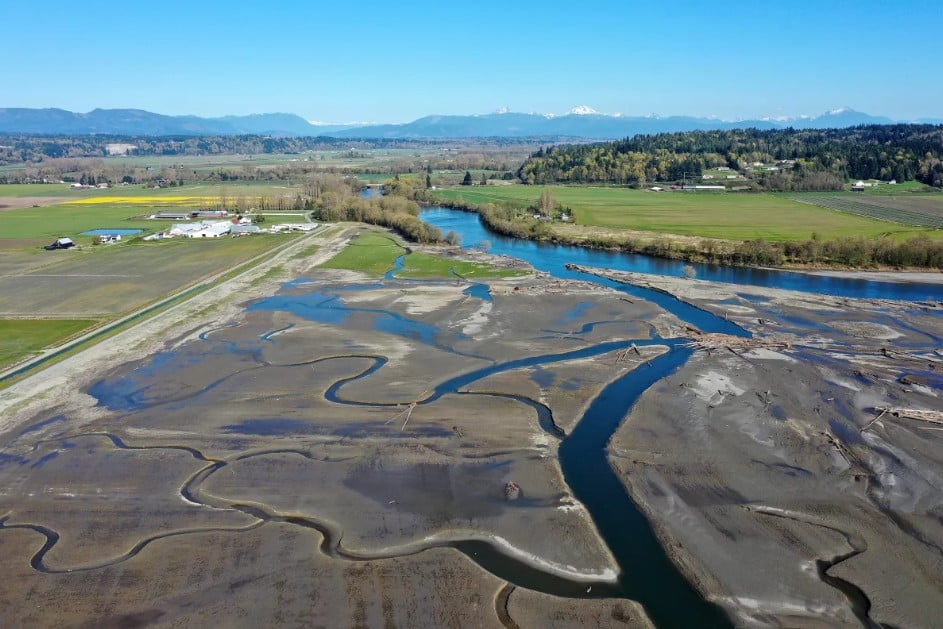
Newly restored marshland, on the right, is separated from farmland by a brand new, larger levee on the left. Photograph courtesy of Megan Farmer and KUOW NPR.
The Stillaguamish Tribe has transformed former farmland at the mouth of the Stillaguamish River into a large tidal marsh by removing two miles of earthen levee that had blocked river and tidal waters for more than a century. The project created a 230-acre wetland that now allows the river to reconnect with its floodplain, restoring conditions that are important for fish and wildlife. Tribal leaders view the effort as a crucial step in rebuilding habitat for Chinook salmon, a species that has declined dramatically throughout Puget Sound and is listed as threatened. The tribe has spent years purchasing land within its traditional territory and has acquired about 2,000 acres for habitat restoration. Although tribal members retained fishing rights under the 1855 Treaty of Point Elliott, they now find themselves buying back land in order to restore the salmon populations that have long been central to their culture and way of life.
The newly restored wetland, known as zis a ba 2, is already showing signs of ecological recovery. Birds such as dunlins have begun using the area in large numbers, suggesting that the marsh is quickly becoming productive habitat. Restoration crews prepared the site before breaching the levee by digging channels that would help tidal flows reshape the landscape, and they uncovered ancient clam shell middens that revealed centuries of human presence. Natural processes accelerated the transformation when major floods swept through the region, bringing sediment, driftwood, and other materials that help build healthy marsh ecosystems. Tribal biologists believe these restored floodplains not only support salmon but also reduce the destructive force of floodwaters by giving rivers more room to spread out during storms.
The restoration effort also highlights ongoing tensions between habitat recovery and agricultural land use. Farmers in the region depend on levees to protect cropland, homes, and nearby communities from flooding, and many worry about losing productive farmland. Local farmer Tyler Breum supports salmon restoration but emphasizes that farmland is limited and essential for food production. He has advocated for repairs to aging levees near his property, noting that failures could threaten hundreds of residents and cause significant damage. At the same time, the tribe has demonstrated that restoration and flood protection can coexist by constructing a stronger, taller setback levee before removing the old one. Looking ahead, both tribal leaders and scientists agree that thousands more acres of habitat may need to be restored if Chinook salmon are to recover, raising hopes that future generations might once again be able to make a living from the waters their ancestors depended on.
#EnvironmentalRestoration #FloodplainManagement #SalmonRecovery #HabitatRestoration #ClimateResilience #Conservation #WetlandRestoration #WetlandWednesday #TheSwampSchool