
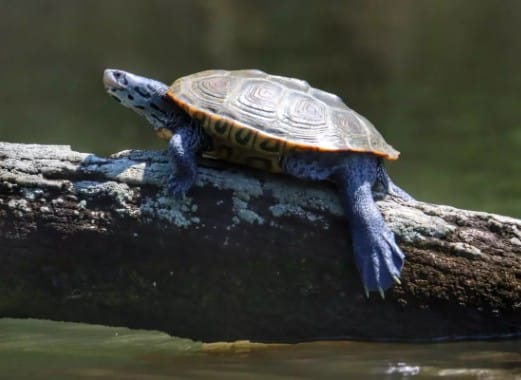
Adult diamondback terrapin, Malaclemys terrapin, basking on a log. Photograph courtesy of James Richards and the U.S. Fish and Wildlife Service.
Another Turtle Month has come to a close, which means this month’s weird and wonderful focus has to shine a spotlight on a turtle: the diamondback terrapin, to be exact. This aquatic turtle occupies the salt marshes along the North Carolina coast, sounds, and tidal channels. Neither a fully freshwater nor a fully saltwater aquatic turtle, this weird and wonderful species, Malaclemys terrapin, needs brackish water habitat to survive. On the smaller side, diamondback terrapins range in size from 4 to 9 inches long, with females tending to be larger than males. Their carapace can vary in color from gray, brown, or black, and each scute has prominent concentric growth rings. In older individuals, these rings may be worn smooth and may not be as textured as they are in younger turtles. In addition to their unique shells, the skin of the head, neck, and legs of these turtles is often white or gray and covered in black spots, speckles, or lines.
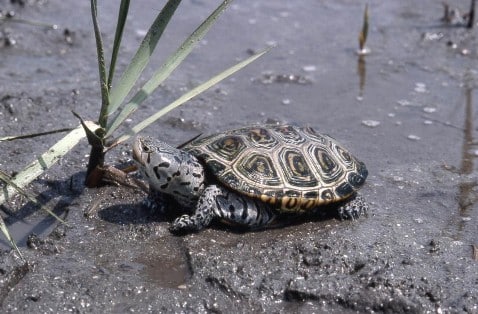
Adult diamondback terrapin in a salt marsh. Photograph courtesy of Ken Taylor and the NC Wildlife Resources Commission.
Diamondback terrapins are carnivorous and feast primarily on mollusks, crustaceans, and other invertebrates that inhabit the saltwater marshes. In particular, this species loves to munch on periwinkle snails. From April to June, female terrapins will nest in places above the high tide line and lay anywhere from two to twelve oval-shaped eggs. The hatchlings will emerge in August or September, but sometimes they hang out in the nest over the winter and do not leave until the following spring. During the warm spring and summer months adult diamondback terrapins are often observed sunning themselves on mudflats.
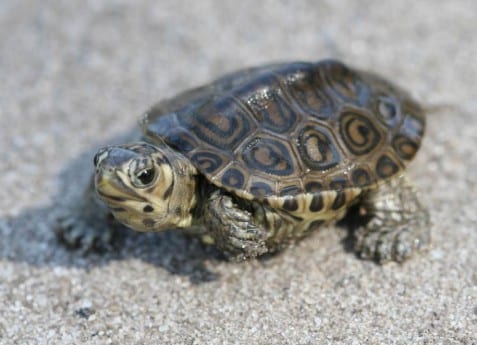
Diamondback terrapin hatchling. Photograph courtesy of Jeff Hall and the NC Wildlife Resources Commission.
Diamondback terrapins were historically valued for their meat: terrapin soup was a popular delicacy among the elite in urban centers along coastal areas, such as Charleston, South Carolina. Their population plummeted as a result of over harvesting; today, while collecting them for food is illegal, the species is still in peril. Crab traps are particularly deadly, as many are left abandoned, and once a terrapin swims into one, they are unable to get out and drown. In addition, many are still illegally collected for the wildlife trafficking trade, and a large portion of their historical habitat has been degraded or outright destroyed for development.
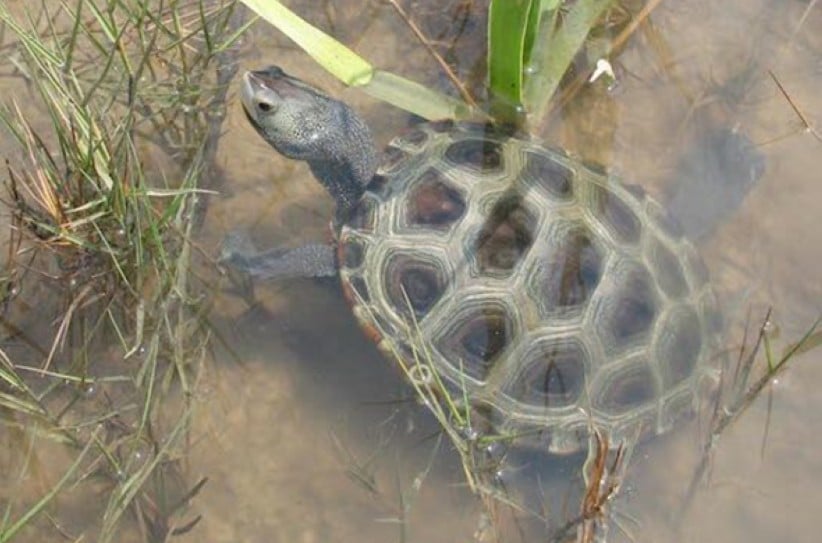
Adult diamondback terrapin swimming in a salt marsh. Photograph courtesy of Andrew Gosse and the NC Wildlife Resources Commission.
However, all is not lost! In recent years it has been made more apparent how beneficial salt marshes are to coastal communities, as they act as hurricane buffers and floodwater control measures. Thus, many salt marshes have been restored, leading to more habitat for diamondback terrapins. On the crab trap front, crabbers can buy special inserts for their traps that prevent terrapins from entering, but allow legal-sized crabs to get through. While many people along the coast might only be interested in the ocean and sandy beaches, the next time you are out that way, pay more attention to the mudflats amongst the salt marshes. You might see a diamondback terrapin or two basking or looking for delicious periwinkle snails.