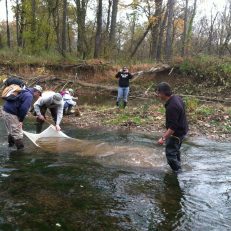
Part 3 — Ecology (Habitat, Resilience, and Restoration Objectives)
Stream Restoration Part 3 covers the ecological fundamentals that influence restoration objectives, habitat outcomes, and long-term resilience. Effective restoration requires more than “stable geometry”—it requires understanding how physical conditions, hydrology, and habitat interact over time.
This course helps practitioners connect ecological goals to field observations and project decisions, so restoration actions are aligned with realistic habitat outcomes and performance expectations.
Where Part 3 fits in the pathway
Part 3 builds on the physical and assessment foundation in Parts 1–2. It strengthens your ability to set meaningful objectives and avoid common project mistakes where design intent and habitat outcomes don’t match.
Who this course is for
- Practitioners involved in restoration planning and objective setting
- Teams working where habitat outcomes and resilience are critical
- Staff who need a stronger ecology lens to support project decisions
- Professionals preparing for Part 4 (Design & Implementation)
What you’ll walk away with
- A practical ecology framework to support restoration objectives
- Better linkage between physical conditions and habitat outcomes
- Improved ability to evaluate tradeoffs and realistic performance targets
- Stronger readiness for design/implementation decisions in Part 4
Next step in the pathway
Continue to Part 4 — Design & Implementation to translate assessment findings and objectives into constructible restoration decisions and oversight-ready documentation.
👥 Team & Company Training
All courses are available for team and company-wide enrollment, allowing organizations to train multiple staff using consistent methods, terminology, and technical standards. 🏢🌊
Team enrollment is ideal for firms and agencies that want to align field practices, assessment approaches, and technical understanding across staff working on stream restoration projects. ✅
🏗️ Ideal For
- 🧑🔬 Environmental consulting firms
- 🏛️ Federal, state, and local agencies
- 🏗️ Mitigation banks and restoration contractors
- 🧰 Engineering and watershed teams
📂 Team License Options
- 👥 Small Team – Up to 5 users
- 🏢 Department – Up to 15 users
Team licenses provide a cost-effective way to train multiple staff while maintaining consistent technical approaches across projects and offices. 📋
📈 Why Teams Choose Swamp School
- 📏 Consistent field methods
- 🌿 Shared technical framework
- 🧱 Aligned design understanding
- 📊 Defensible project documentation
📩 Team Enrollment & Scheduling
Team pricing and enrollment options vary based on group size and course selection.If you’d like to discuss team training options or determine the best fit for your organization, schedule a brief introductory call.
⏱️ Discuss team training options:
Schedule a 15-Minute Team Training Call