
The following blog post is a summary of the article “Reviving the Old Bay” by Jenny Rogers, published in Nature Conservancy magazine on July 30, 2025. To read the original article, click here.
Stephanie Alexander, manager of the Horn Point Oyster Hatchery, oversees one of the largest oyster restoration operations on the Eastern Seaboard. The hatchery produces billions of oysters for the Chesapeake Bay, nurturing larvae that attach to shells and mature before being released into the water. This effort is part of a broader restoration mission to revive the bay’s ecological balance and improve water quality. The Chesapeake Bay, a massive estuary supporting thousands of species and millions of people, has long been central to the region’s economy and culture. However, its shallow depth and history of overexploitation have made it vulnerable to pollution and environmental decline.
Over the past four centuries, human activities have dramatically altered the Chesapeake watershed. Forests that once dominated the region were cleared for development and agriculture, reducing natural filtration and contributing to runoff pollution. Algal blooms caused by excess nutrients created oxygen-deprived dead zones, killing seagrasses and aquatic life. In response, a coalition of governments, nonprofits, and local organizations—including The Nature Conservancy (TNC)—has launched widespread restoration efforts. These include reforesting watersheds, rebuilding oyster reefs, and promoting sustainable farming practices to reduce nutrient runoff and revive the bay’s ecosystems.
The connection between land and water is central to this restoration work. In Pennsylvania, TNC’s projects along the Kittatinny Ridge and Susquehanna River preserve forests that naturally filter and store water before it reaches the bay. Historical research shows that before large-scale deforestation, beavers and wetlands slowed freshwater flow, helping oysters thrive even in upper tributaries. Modern efforts aim to reestablish that balance by conserving forests and reducing pollution from agriculture. Farmers now use cover crops, better fertilizer practices, and nutrient management strategies to minimize runoff, contributing to a measurable reduction in nitrogen pollution over the last decade.
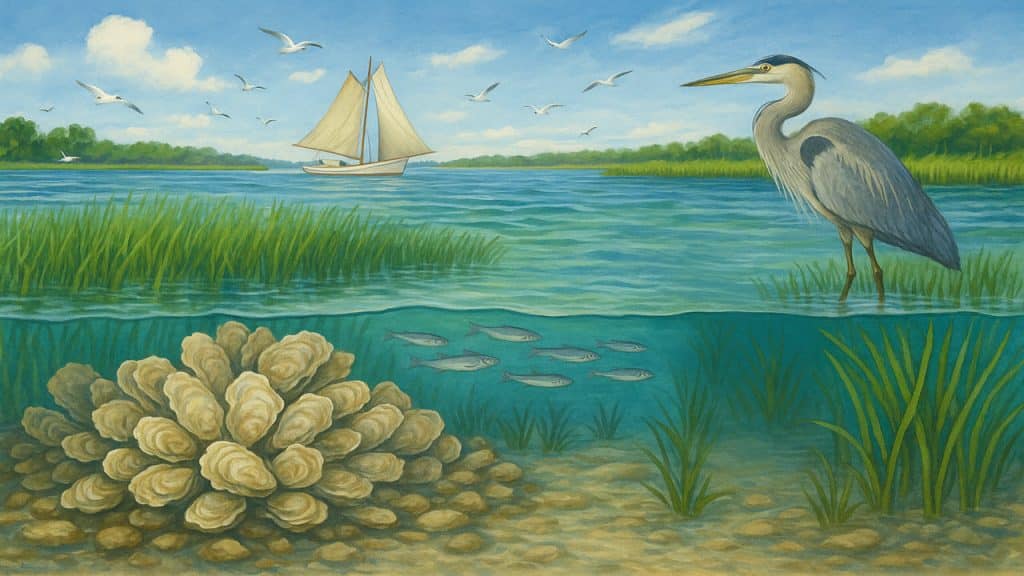
Restoration successes offer reason for hope. Oyster sanctuaries like Harris Creek have flourished, with reefs supporting thriving colonies and improving water clarity. Seagrass meadows, once decimated, are rebounding in several areas as nutrient levels decline. While full restoration to precolonial conditions is impossible, conservationists envision a Chesapeake Bay that is healthy, productive, and resilient in the face of climate change. Ongoing challenges remain, especially in maintaining funding and public commitment; but the bay’s recovery shows that ecosystems can rebound quickly when given the right support. The Chesapeake’s story stands as both a warning and a model for global environmental restoration.
#ChesapeakeBay #Restoration #CleanWater #Conservation #EcoAction